
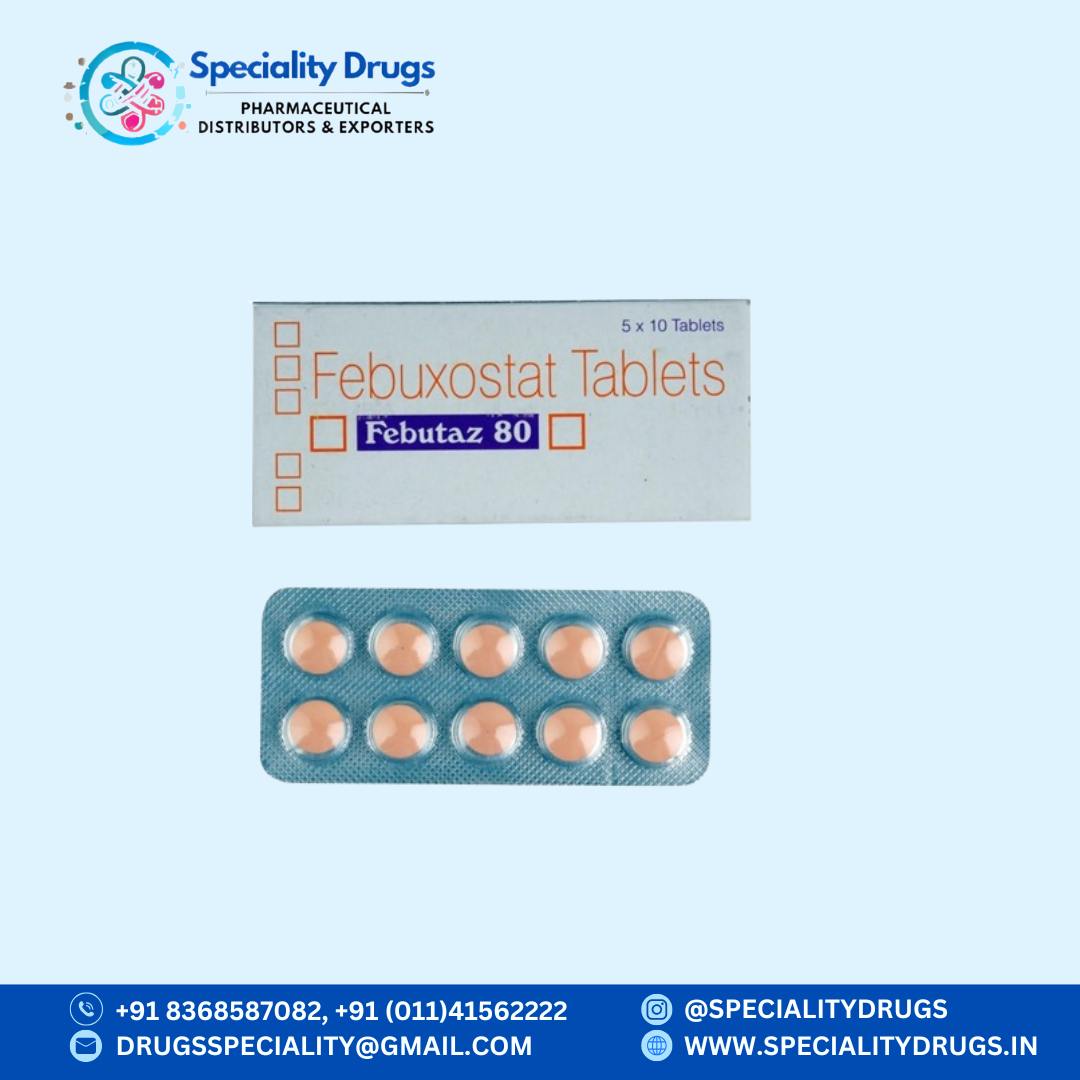
What is the Use of Febuxostat Tablet?
Febuxostat Tablet is primarily used for:
-
Treatment of chronic gout
-
Preventing gout attacks by lowering uric acid levels
-
Managing hyperuricemia (high uric acid) in patients who cannot tolerate allopurinol
-
Preventing uric acid buildup and joint inflammation
Your doctor may prescribe Febuxostat as part of long-term gout management.
Benefits of Febuxostat Tablet
-
Effectively lowers uric acid levels in the body
-
Helps prevent painful gout flare-ups
-
Reduces swelling, redness, and joint stiffness
-
Suitable for patients who are unable to use allopurinol
-
Improves mobility and joint comfort over long-term use
-
Convenient once-daily oral dosage
Side Effects of Febuxostat Tablet
Common side effects may include:
-
Nausea
-
Joint pain or stiffness
-
Rash or mild skin reaction
-
Headache
-
Diarrhea
-
Dizziness
Serious side effects (seek medical help):
-
Chest pain or irregular heartbeat
-
Liver problems (yellow skin or eyes)
-
Severe allergic reactions
-
Blood disorders (rare)
Always consult a healthcare professional if symptoms persist or worsen.
How to Take Febuxostat Tablet
-
Usually taken once daily, with or without food
-
Swallow the tablet whole with water
-
Take at the same time each day
-
Do not stop the medicine without doctor’s advice
Precautions
-
Inform your doctor about any heart disease, liver problems, or ongoing medications
-
Regular liver function tests may be needed
-
Not recommended during pregnancy or breastfeeding unless prescribed
-
Avoid alcohol as it may worsen gout symptoms
Disclaimer
This information is for educational purposes only. Always consult your doctor or pharmacist for personalized medical advice before using Febuxostat Tablet.
Frequently Asked Questions:
1. What is Febuxostat Tablet used for?
Febuxostat Tablet is used to treat chronic gout and high uric acid levels (hyperuricemia) by reducing uric acid production in the body.
2. How does Febuxostat Tablet work?
It works by inhibiting xanthine oxidase, an enzyme responsible for producing uric acid. This helps prevent gout attacks and uric acid crystal buildup.
3. How long does Febuxostat take to lower uric acid levels?
Improvement may be seen within 2–4 weeks, but full benefits can take longer. Regular use as prescribed helps maintain stable uric acid levels.
4. Can Febuxostat Tablet prevent gout attacks?
Yes. Febuxostat effectively reduces uric acid, helping prevent painful gout flare-ups and long-term joint damage.
5. What are the common side effects of Febuxostat Tablet?
Common side effects include nausea, joint pain, headache, dizziness, diarrhea, and mild skin reactions.
6. Is Febuxostat safer than allopurinol?
Febuxostat is often prescribed for patients who cannot tolerate allopurinol. However, the choice depends on medical history and doctor’s guidance.
7. Can I take Febuxostat Tablet with food?
Yes. Febuxostat can be taken with or without food, preferably at the same time every day for consistent results.
8. Is long-term use of Febuxostat safe?
Long-term use is generally safe under medical supervision, with periodic liver and heart monitoring recommended.
9. Who should avoid taking Febuxostat?
People with severe heart disease, liver disorders, or known allergies to the drug should avoid Febuxostat unless specifically advised by a doctor.
10. Where can I buy Febuxostat Tablet in bulk or for export?
Febuxostat Tablet is available through reliable pharmaceutical exporters, suppliers, wholesalers, and distributors in India offering global shipment.

Reviews
There are no reviews yet.