
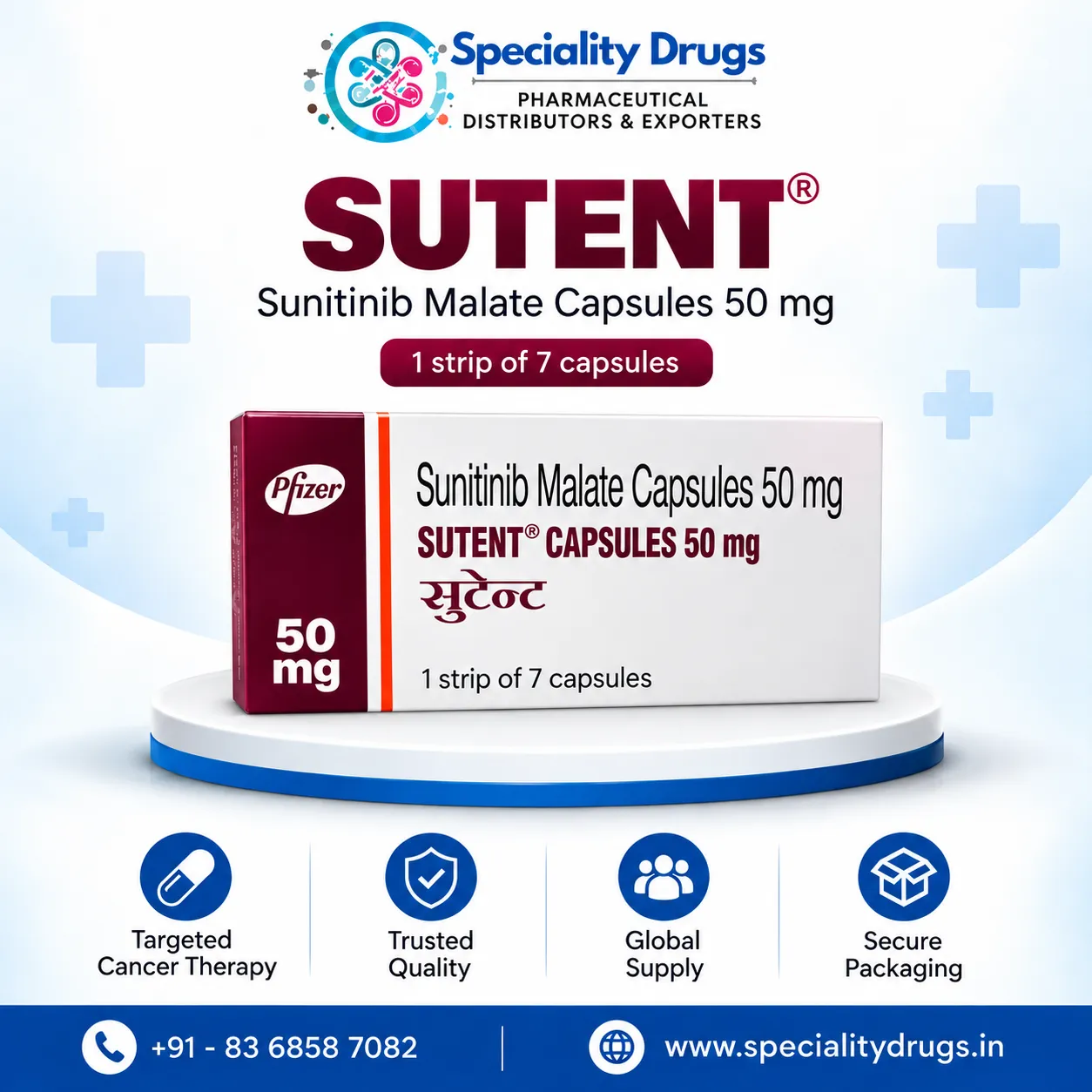
Sutent 50mg Capsule contains sunitinib malate, a targeted anticancer medicine belonging to the class of protein kinase inhibitors. It works by blocking specific protein kinases involved in tumor-cell growth and the formation of blood vessels that support tumor growth. Sutent is prescribed for certain cancers, including advanced renal cell carcinoma (RCC), gastrointestinal stromal tumors (GIST), and progressive pancreatic neuroendocrine tumors (pNET).
Sutent 50mg should be used strictly under the supervision of an oncologist. The appropriate dose and treatment schedule depend on the type of cancer, previous treatment, overall health, and how the patient responds to therapy.
How to Use Sutent 50mg
- Take Sutent exactly as prescribed by your oncologist.
- Sutent can generally be taken with or without food.
- Take it at approximately the same time each day.
- Swallow the capsule whole with water.
- Do not open, crush, chew, or split the capsule.
- For GIST and advanced RCC, a commonly used regimen is 50mg once daily for 4 weeks followed by 2 weeks without treatment, but the exact schedule must be determined by the treating doctor.
- Do not change the dose or treatment schedule without medical advice.
Sutent 50mg Uses
Sutent may be prescribed for:
- Advanced Renal Cell Carcinoma (RCC): A type of kidney cancer that has advanced.
- Gastrointestinal Stromal Tumor (GIST): Particularly when the disease has progressed after, or the patient cannot tolerate, imatinib.
- Pancreatic Neuroendocrine Tumors (pNET): Progressive, well-differentiated tumors that cannot be surgically removed or have spread.
- Certain high-risk RCC cases after nephrectomy: Sunitinib may be used as adjuvant treatment in appropriate patients.
How Does Sutent 50mg Work?
- Targeted kinase inhibition: Sunitinib blocks several protein kinases involved in cancer-cell signaling.
- Inhibits tumor blood-vessel formation: It interferes with pathways that promote angiogenesis, which tumors can use to obtain blood supply.
- Helps control tumor progression: By targeting these pathways, Sutent can help slow disease progression in approved cancer indications.
- Used in specific cancer settings: Its use is based on the cancer type, disease stage and previous treatments.
Sutent is not a general cancer medicine for every type of cancer. Its use should be determined by an oncologist.
Sutent 50mg Side Effects
Commonly reported side effects include:
- Fatigue and weakness
- Diarrhea
- Nausea and vomiting
- Loss of appetite
- Abdominal discomfort
- Mouth sores or inflammation
- Changes in taste
- High blood pressure
- Hand-foot syndrome
- Skin rash or changes in skin color
- Hair-color changes
- Headache
- Constipation
- Muscle or joint pain
- Reduced blood-cell counts
Sunitinib can also cause serious adverse reactions, including liver toxicity, heart problems, bleeding, blood clots, severe hypertension, thyroid dysfunction, kidney problems and impaired wound healing. Regular medical monitoring is therefore important during treatment.
Sutent 50mg Drug Interactions
Tell your doctor about all prescription medicines, over-the-counter medicines, vitamins and herbal supplements you take.
Particular attention may be required with medicines that affect CYP3A4, as they can alter sunitinib exposure. Grapefruit/grapefruit juice and St. John’s Wort may also interact with sunitinib and should be discussed with your healthcare professional.
Sutent 50mg During Pregnancy and Breastfeeding
Sunitinib can harm an unborn baby. Patients who can become pregnant should discuss effective contraception with their healthcare provider. Patients who are pregnant, planning pregnancy, or breastfeeding should speak with their doctor before using Sutent.
Sutent 50mg and Surgery
Sunitinib may affect wound healing. If you are scheduled for surgery or a dental procedure, tell your doctor or dentist that you are taking Sutent. Your oncologist may recommend temporarily stopping treatment around surgery depending on the clinical situation.
Sutent 50mg Storage
- Store Sutent according to the manufacturer’s instructions.
- Keep the capsules in their original packaging/container.
- Protect the medicine from excessive heat and moisture.
- Keep it out of reach of children.
- Do not use capsules that are damaged or past their expiry date.
Important Safety Information
Sutent is a prescription anticancer medicine and should only be taken under medical supervision. Your doctor may regularly monitor blood pressure, blood counts, liver function, thyroid function, heart function and other parameters during treatment.
Do not start, stop, or change Sutent 50mg dosage without consulting your oncologist.
Frequently Asked Questions About Sutent 50mg Capsule
1. What is Sutent 50mg Capsule used for?
Sutent 50mg contains sunitinib and is used for certain cancers, including advanced renal cell carcinoma, GIST after progression or intolerance to imatinib, and certain progressive pancreatic neuroendocrine tumors.
2. What is the active ingredient in Sutent 50mg?
The active ingredient is sunitinib malate, a protein kinase inhibitor.
3. Is Sutent 50mg a chemotherapy medicine?
Sutent is generally classified as a targeted cancer therapy and protein kinase inhibitor, rather than conventional cytotoxic chemotherapy.
4. How should Sutent 50mg be taken?
Take it exactly as prescribed by your oncologist. It can generally be taken with or without food, and the capsule should be swallowed whole.
5. Can Sutent 50mg be taken every day?
The schedule depends on the cancer being treated. For GIST and advanced RCC, a commonly used schedule is 4 weeks of treatment followed by 2 weeks off. Other indications may use different schedules.
6. Can Sutent 50mg be taken with food?
Yes. Sunitinib can be taken with or without food.
7. What happens if I miss a dose of Sutent?
Do not automatically take an extra dose. Contact your doctor or pharmacist for instructions based on when the missed dose occurred and your prescribed treatment schedule.
8. Can Sutent capsules be crushed or opened?
No. The capsules should be swallowed whole and should not be opened, crushed, chewed or split.
9. What are the most common side effects of Sutent?
Common side effects include fatigue, diarrhea, nausea, vomiting, appetite changes, mouth inflammation, skin changes, hand-foot syndrome and high blood pressure.
10. Can Sutent cause high blood pressure?
Yes. Hypertension is a recognized adverse effect, and blood pressure should be monitored during treatment.
11. Can Sutent affect the liver?
Yes. Sunitinib can cause hepatotoxicity, which can occasionally be severe. Doctors may monitor liver function during treatment.
12. Can Sutent be taken during pregnancy?
Sutent may harm an unborn baby. Pregnancy should be discussed with the treating oncologist before starting treatment.
13. Can I drink grapefruit juice while taking Sutent?
Grapefruit and grapefruit juice may interact with sunitinib. Discuss their use with your doctor before consuming them during treatment.
14. Can Sutent be stopped suddenly?
Do not stop Sutent on your own. Your oncologist may need to adjust, interrupt or discontinue treatment depending on your cancer response and side effects.
15. Is Sutent 50mg available for all types of cancer?
No. Sutent is approved for specific cancer indications, and its suitability depends on the cancer diagnosis and individual clinical circumstances.
Medical Disclaimer: This information is for educational and product-information purposes only and does not replace advice from an oncologist, doctor or pharmacist. Sutent is a prescription anticancer medicine and should be used only according to a healthcare professional’s instructions.

Reviews
There are no reviews yet.