
1. What is Rhysmol?
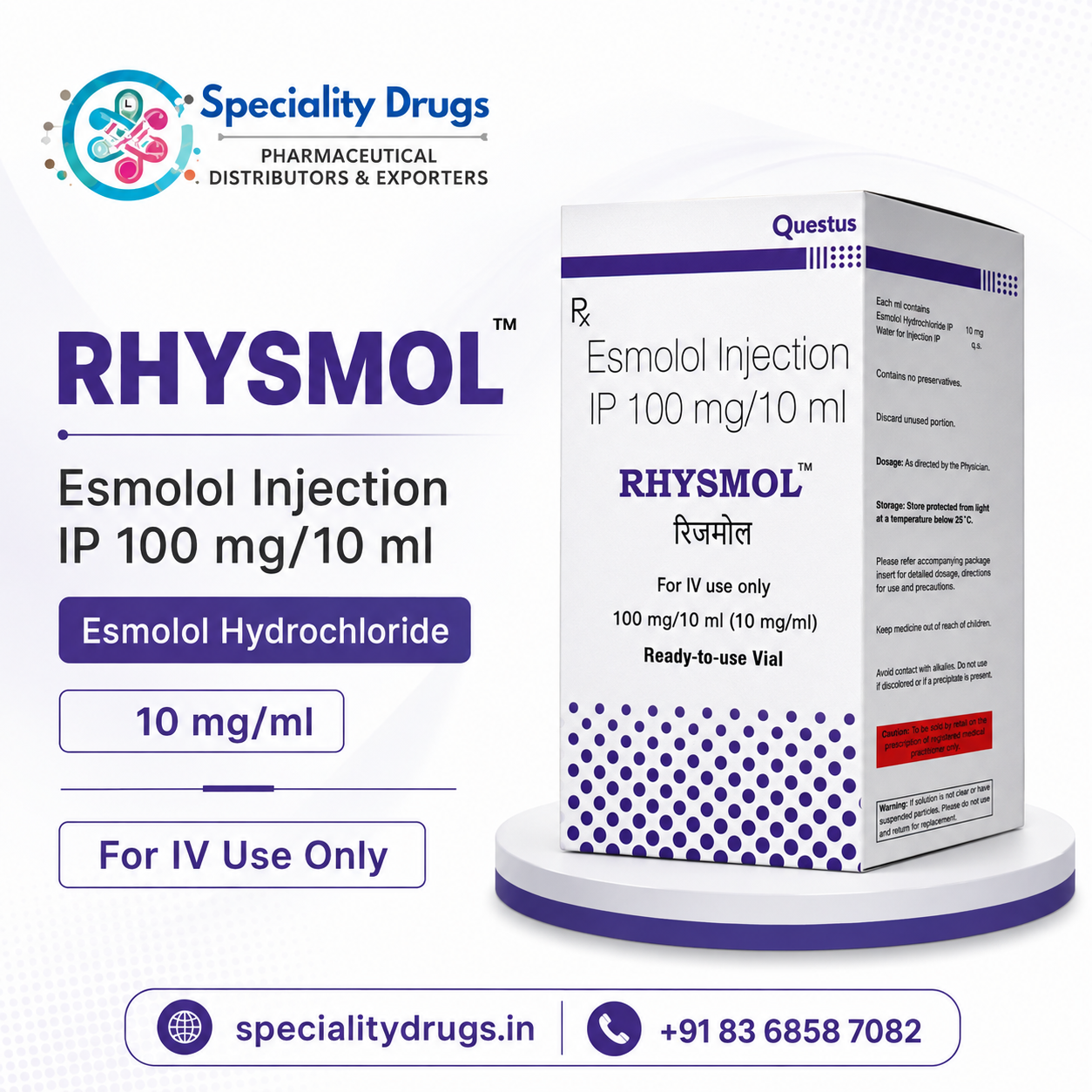
Rhysmol is an intravenous medicine containing Esmolol Hydrochloride, a short-acting beta-adrenergic blocker, commonly known as a beta-blocker. The product shown contains 100 mg of esmolol hydrochloride in 10 ml, equivalent to a concentration of 10 mg/ml.
Esmolol works primarily by blocking beta-1 adrenergic receptors in the heart. This reduces the effects of adrenaline and related stress hormones on the cardiovascular system. As a result, the heart can beat more slowly and with less force, helping healthcare professionals rapidly control an excessively fast heart rate. Because esmolol has a very short duration of action, its cardiovascular effects can be adjusted relatively quickly when administration is changed or stopped.
Esmolol injection is generally used for short-term cardiovascular control, particularly in monitored clinical settings. Approved uses include rapid control of ventricular rate in certain cases of supraventricular tachycardia, including atrial fibrillation and atrial flutter, as well as short-term management of tachycardia and hypertension associated with surgery or the perioperative period.
According to the supplied product packaging, Rhysmol is manufactured by Questus Pharma Private Limited and is intended for intravenous use only.
Because this is a prescription injectable cardiovascular medicine, it should only be administered by qualified healthcare professionals in an appropriate clinical setting. It is not intended for self-administration.
2. Uses of Rhysmol
Rhysmol may be used by healthcare professionals for short-term cardiovascular control in situations where rapid adjustment of heart rate or blood pressure is clinically required.
Common medically recognized uses of intravenous esmolol include:
- Rapid control of ventricular rate in selected patients with atrial fibrillation.
- Rapid control of ventricular rate in selected patients with atrial flutter.
- Management of certain forms of supraventricular tachycardia.
- Control of noncompensatory sinus tachycardia when specific intervention is considered necessary.
- Short-term control of tachycardia associated with surgery or anesthesia.
- Short-term treatment of certain episodes of perioperative hypertension accompanied by tachycardia.
The exact indication depends on the patient’s medical condition and the treating physician’s assessment.
This medicine should only be administered under the supervision of a qualified healthcare professional.
3. Benefits of Rhysmol
The principal benefit of esmolol is its ability to provide rapid, short-term control of cardiovascular activity when close monitoring and quick adjustment are needed.
Potential clinical benefits include:
- Helps reduce an excessively rapid heart rate.
- Helps control ventricular rate in selected supraventricular arrhythmias.
- Provides short-term control during certain perioperative situations.
- Its short-acting nature allows clinicians to adjust cardiovascular effects relatively quickly.
- May help control tachycardia and associated blood-pressure elevation in appropriate clinical circumstances.
These benefits do not mean that Rhysmol cures an underlying heart rhythm disorder. Its purpose is generally to provide controlled, short-term cardiovascular management while the underlying condition is evaluated or treated.
4. How Does Rhysmol Work?
Esmolol belongs to the beta-1 selective adrenergic blocker group. The sympathetic nervous system uses substances such as adrenaline to increase heart rate and cardiac activity.
Esmolol temporarily blocks beta-1 receptors in the heart. This reduces sympathetic stimulation and can result in:
- A slower heart rate.
- Reduced force of cardiac contraction.
- Slower conduction through the heart’s electrical conduction system.
- Reduced cardiac workload.
Its short duration of action is particularly useful when clinicians need close control over the patient’s cardiovascular response.
5. How to Take Rhysmol
Rhysmol is not an oral medicine. The supplied pack specifically states that it is for IV use only.
For safety:
- It should be administered only by trained healthcare professionals.
- The dose and rate of administration must be individually determined by the treating physician.
- Heart rate and blood pressure generally require close clinical monitoring during treatment.
- Patients should never attempt to inject or administer this medicine themselves.
- The treatment plan should not be changed without medical supervision.
There is no appropriate self-treatment regimen for this injectable medicine. Esmolol dosing is determined according to the clinical indication and the patient’s cardiovascular response.
6. Side Effects of Rhysmol
Like all medicines, Rhysmol may cause side effects, although not everyone experiences them.
Common Side Effects
Possible adverse effects associated with esmolol include:
- Low blood pressure (hypotension)
- Slow heart rate (bradycardia)
- Dizziness
- Weakness or fatigue
- Nausea
- Headache
- Injection-site or infusion-related discomfort
The risk and severity of cardiovascular effects can depend on the patient’s condition and the amount of medicine administered. Hypotension and bradycardia are important effects requiring clinical monitoring.
Serious Side Effects
Serious reactions can include:
- Severe or persistent low blood pressure
- Marked slowing of the heart rate
- Worsening heart failure
- Cardiovascular collapse
- Severe allergic or hypersensitivity reactions
- Breathing difficulties or worsening bronchospasm in susceptible individuals
Medical professionals should respond promptly to significant cardiovascular or allergic reactions.
If side effects persist or become severe, contact your healthcare provider promptly.
7. Warnings and Precautions
Esmolol requires careful medical assessment before administration.
It is contraindicated in certain conditions, including severe sinus bradycardia, heart block greater than first degree, sick sinus syndrome, decompensated heart failure, cardiogenic shock, and known hypersensitivity to esmolol. Certain situations involving intravenous calcium-channel blockers such as verapamil can also create serious cardiovascular risks.
Healthcare professionals should use particular caution in patients with:
- Heart failure or other significant cardiovascular disease.
- Low blood pressure.
- Reactive airway disease or bronchospasm.
- Diabetes, because beta-blockade can mask some symptoms of low blood glucose.
- Certain circulation or peripheral vascular disorders.
- Coronary artery disease.
- Conditions requiring careful blood-pressure monitoring.
Pregnant or breastfeeding patients should tell their healthcare professional about their status before treatment so that the potential benefits and risks can be assessed.
Patients should also disclose all known drug allergies and relevant medical history before receiving the injection.
8. Drug Interactions
Esmolol can interact with medicines that affect heart rate, blood pressure, cardiac conduction, or cardiovascular function.
Healthcare professionals should know about all medicines being taken, including:
- Prescription medicines.
- Over-the-counter medicines.
- Medicines for high blood pressure.
- Medicines affecting heart rhythm.
- Calcium-channel blockers.
- Other beta-blockers.
- Diabetes medicines.
- Herbal products and supplements.
Particular caution is required with intravenous cardiodepressant calcium-channel blockers such as verapamil, because their combined cardiovascular effects can be dangerous.
9. Storage Instructions
The supplied Rhysmol packaging states that the product should be protected from light and stored at a temperature below 25°C.
General precautions include:
- Keep the medicine in its original packaging when appropriate.
- Protect it from excessive heat and direct sunlight.
- Keep it out of reach of children.
- Do not use the injection after its expiry date.
- Do not use the product if the solution is unclear or contains visible particles or a precipitate.
- Discard any unused portion according to applicable healthcare-facility procedures.
Storage and handling should follow the product label and institutional requirements.
10. Disclaimer
This Rhysmol product description is provided for educational and informational purposes only. It is not a substitute for professional medical advice, diagnosis, or treatment.
Rhysmol contains a prescription cardiovascular medicine and is intended for administration by qualified healthcare professionals. Do not self-medicate, attempt to administer the injection yourself, or use it without appropriate medical supervision.
The appropriate treatment, dose, duration, and monitoring requirements vary according to the patient’s condition. Always follow the instructions of the treating healthcare professional. Individual responses to medicines may vary.
11. Frequently Asked Questions
1. What is Rhysmol used for?
Rhysmol contains esmolol hydrochloride and is used for short-term cardiovascular control in selected clinical situations. Its recognized uses include rapid control of ventricular rate in certain cases of atrial fibrillation, atrial flutter, and supraventricular tachycardia, as well as selected perioperative tachycardia and hypertension.
2. How does Rhysmol work?
Rhysmol works by blocking beta-1 adrenergic receptors in the heart. This reduces the effects of sympathetic stimulation, helping decrease heart rate and cardiac workload. Its short-acting nature allows healthcare professionals to make relatively rapid adjustments when cardiovascular control needs to change.
3. Is Rhysmol safe?
Esmolol can be appropriate when prescribed and administered in a suitable clinical setting, but it is not risk-free. It can cause hypotension, bradycardia, and other cardiovascular complications. It is contraindicated in several serious cardiovascular conditions, so medical assessment and monitoring are important.
4. Can Rhysmol be used long term?
Rhysmol is generally intended for short-term intravenous cardiovascular control, rather than routine long-term treatment. The underlying condition may require a different long-term management strategy. The treating physician determines how long esmolol therapy is appropriate based on the patient’s clinical circumstances.
5. What happens if a dose is missed?
Because Rhysmol is administered intravenously by healthcare professionals, patients normally do not manage individual doses themselves. If there is any concern about a scheduled treatment or infusion, the healthcare team should be informed rather than attempting to compensate independently.
6. Can Rhysmol be stopped suddenly?
Esmolol is a short-acting intravenous medicine, but treatment should still be stopped or adjusted only according to medical judgment. In patients with coronary artery disease, abrupt withdrawal of beta-blockade may be associated with myocardial ischemia concerns.
7. Can Rhysmol be taken with food?
Rhysmol is an intravenous injection, not an oral medicine, so food does not determine how the injection is administered. It is given by a healthcare professional according to the clinical treatment plan.
8. What are the common Rhysmol side effects?
Important possible adverse effects include low blood pressure and slow heart rate. Other reactions can occur depending on the patient and clinical situation. Because significant cardiovascular effects are possible, patients receiving intravenous esmolol require appropriate medical monitoring.
9. Who should avoid Rhysmol?
Patients with severe sinus bradycardia, significant heart block, sick sinus syndrome, decompensated heart failure, cardiogenic shock, pulmonary hypertension, or known hypersensitivity to esmolol may be unable to receive it. Intravenous verapamil and esmolol also require particular caution because of potentially serious cardiovascular effects.
10. How should Rhysmol be stored?
The supplied product packaging states that Rhysmol should be protected from light and stored below 25°C. The injection should not be used if it is unclear, contains a precipitate, or has passed its expiry date. Healthcare facilities should follow the manufacturer’s storage and handling instructions.
Reviews
There are no reviews yet.