
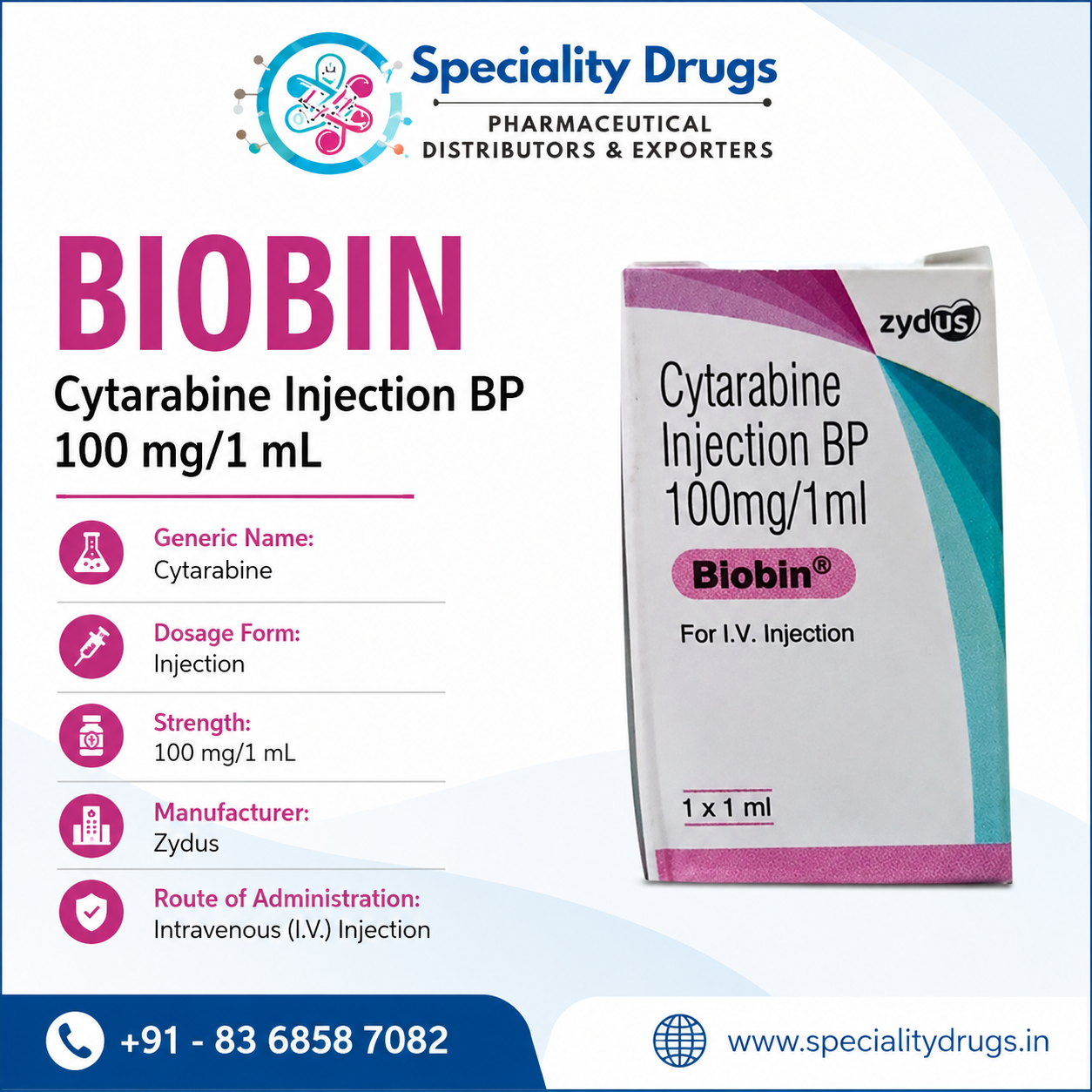
Biobin Cytarabine Injection 100 mg/1 mL
Biobin® Cytarabine Injection BP 100 mg/1 mL contains cytarabine, an antineoplastic medicine used in specialist cancer treatment. The supplied product packaging identifies it as an intravenous injection and shows the Zydus brand. Cytarabine is a chemotherapy medicine belonging to the antimetabolite group and is primarily used in treatment protocols for certain blood cancers.
Because cytarabine can cause significant suppression of the bone marrow and other serious adverse effects, treatment requires careful assessment, laboratory monitoring, and supervision by qualified oncology professionals. Official prescribing information specifically states that cytarabine should be used by physicians experienced in cancer chemotherapy.
What Is Biobin Cytarabine Injection?
Biobin Cytarabine Injection contains cytarabine, also known as cytosine arabinoside or Ara-C. It is a cytotoxic antimetabolite that interferes with the ability of rapidly dividing cells to synthesize DNA.
Cancer cells can multiply rapidly and therefore depend heavily on DNA synthesis. Cytarabine is converted within cells into an active nucleotide form that interferes with DNA polymerase and DNA synthesis. This makes it particularly active against cells undergoing DNA replication.
Cytarabine is used as part of combination chemotherapy protocols for certain leukemias. Approved prescribing information identifies its use in remission-induction treatment of acute non-lymphocytic leukemia and notes its usefulness in certain cases of acute lymphocytic leukemia and the blast phase of chronic myelocytic leukemia. Specific formulations may also have specialist uses involving the central nervous system.
Cytarabine Injection Uses
Cytarabine may form part of specialist treatment plans for certain hematological cancers. Medically recognized uses described in prescribing information include:
- Treatment protocols for acute non-lymphocytic leukemia.
- Treatment of certain cases of acute lymphocytic leukemia.
- Treatment of the blast phase of chronic myelocytic leukemia.
- Specialist prevention or treatment of meningeal leukemia with appropriate preservative-free formulations.
The exact role of cytarabine depends on the cancer diagnosis, disease stage, treatment protocol, laboratory findings, and the patient’s overall clinical condition. It is commonly incorporated into combination chemotherapy rather than being considered a general-purpose medicine.
Biobin Cytarabine Benefits
Cytarabine’s principal clinical benefit comes from its ability to interfere with DNA synthesis in rapidly dividing malignant cells. When incorporated into an appropriate chemotherapy regimen, this activity can contribute to reduction of abnormal blood-cell populations and help achieve remission in selected leukemias.
Potential therapeutic benefits include:
- Supporting remission-induction chemotherapy in appropriate leukemia treatment protocols.
- Targeting rapidly proliferating malignant cells.
- Contributing to combination chemotherapy regimens.
- Providing an established antimetabolite mechanism for certain hematological cancers.
- Supporting specialist treatment strategies determined by an oncology team.
The response to chemotherapy varies from patient to patient. Cytarabine should not be described as guaranteeing a cure or remission.
How Does Cytarabine Work?
Cytarabine is a cell-cycle-specific antimetabolite, with its strongest activity occurring during the S phase, when cells are synthesizing DNA.
After entering cells, cytarabine is metabolized into an active nucleotide called cytarabine triphosphate. This active metabolite inhibits DNA polymerase, an enzyme needed for DNA replication. Cytarabine can also become incorporated into DNA and RNA, further interfering with normal nucleic-acid processes.
Because rapidly dividing cells are especially dependent on DNA replication, this mechanism can affect malignant cells. However, some healthy rapidly dividing cells can also be affected. This explains why cytarabine can produce substantial effects on the bone marrow and other tissues.
Cytarabine Side Effects
Like other chemotherapy medicines, cytarabine can cause adverse effects. The severity and likelihood depend on factors such as the treatment protocol, patient’s health, and other medicines used alongside it.
Common or Frequently Reported Effects
Possible effects include:
- Nausea and vomiting
- Diarrhea
- Abdominal discomfort
- Mouth or oral ulceration
- Changes in blood-cell counts
- Liver-function abnormalities
- General weakness or fatigue
The prescribing information identifies bone-marrow suppression as the major toxic effect of cytarabine. This can lead to reduced white blood cells, red blood cells, and platelets.
Serious Side Effects
Cytarabine can also cause serious or potentially life-threatening complications. These may include severe suppression of blood-cell production, infections associated with reduced immune defenses, bleeding associated with low platelet counts, severe allergic reactions, and certain neurological, gastrointestinal, pulmonary, hepatic, or eye-related toxicities associated particularly with intensive treatment schedules.
Patients receiving cytarabine therefore require appropriate medical monitoring. Any unexpected or severe symptoms during cancer treatment should be reported promptly to the treating healthcare team.
Warnings and Precautions
Cytarabine requires specialist medical supervision. The medicine is contraindicated in people with known hypersensitivity to cytarabine. Particular caution may be required in patients with existing bone-marrow suppression or other significant medical problems.
Blood counts and other laboratory tests are important during treatment because cytarabine can substantially affect blood-cell production. During intensive treatment, healthcare professionals may also monitor organ function and watch for complications associated with the particular chemotherapy protocol.
Patients should tell their oncology team about existing medical conditions, allergies, pregnancy, breastfeeding, and all medicines or supplements they use.
Pregnancy and Breastfeeding
Cytarabine is a cytotoxic chemotherapy medicine and requires particular consideration during pregnancy. Patients who are pregnant, planning pregnancy, or breastfeeding should discuss their circumstances directly with their oncology team before treatment decisions are made.
Drug Interactions
Cytarabine may be used as part of combination chemotherapy, meaning interaction considerations can be clinically important. The treating healthcare professional should have a complete list of medicines being used by the patient.
This includes:
- Prescription medicines
- Non-prescription medicines
- Vitamins
- Herbal products
- Other cancer treatments
- Medicines that may affect blood counts or organ function
Because interaction risks can depend on the complete chemotherapy regimen, patients should not add, discontinue, or change medicines without discussing the change with their healthcare professional.
Cytarabine Dosage Information
Cytarabine treatment is highly individualized. The appropriate regimen depends on the specific cancer, treatment objective, combination medicines, patient’s age and health status, laboratory results, and the selected oncology protocol.
For this reason, a single standard Cytarabine dosage should not be applied to every patient. The medicine’s prescribing information emphasizes that treatment should be directed by physicians experienced in cancer chemotherapy.
Biobin Cytarabine Injection Manufacturer
The supplied packaging identifies the product as Biobin® and displays the Zydus branding. The pack shown in the supplied image states Cytarabine Injection BP 100 mg/1 mL and identifies it for I.V. injection.
Product packaging, batch information, expiry date, and official prescribing information should always be verified by an appropriately qualified healthcare professional before any clinical decision.
Biobin Cytarabine Price
The price of Biobin Cytarabine Injection can vary according to the market, supplier, location, packaging, taxes, and applicable pharmacy or hospital charges. Because this is a prescription chemotherapy medicine, price information should be confirmed through an authorized healthcare or pharmacy channel rather than relying on an unverified online listing.
Storage Information
Storage requirements should be followed exactly according to the product’s official packaging and prescribing information. Healthcare facilities should maintain appropriate pharmaceutical storage conditions and protect medicines from unsuitable environmental conditions.
Keep medicines away from children and do not use a product that is expired, damaged, or has packaging that appears compromised. Healthcare professionals should follow the manufacturer’s handling requirements for cytotoxic medicines.
Frequently Asked Questions
1. What is Biobin Cytarabine Injection used for?
Biobin contains cytarabine, an antineoplastic chemotherapy medicine. Cytarabine is used as part of specialist treatment protocols for certain blood cancers, particularly selected forms of acute leukemia. Its exact role depends on the patient’s diagnosis and chemotherapy plan.
2. What is the active ingredient in Biobin?
The active ingredient is cytarabine. It is an antimetabolite chemotherapy medicine that interferes with DNA synthesis, particularly in rapidly dividing cells.
3. How does cytarabine work?
Cytarabine is converted inside cells into an active metabolite that inhibits DNA polymerase and interferes with DNA synthesis. This makes it particularly active against cells undergoing DNA replication, including certain malignant blood cells.
4. Is cytarabine a chemotherapy medicine?
Yes. Cytarabine is an antineoplastic chemotherapy medicine. It is used by oncology specialists as part of treatment protocols for selected hematological cancers.
5. What are the important cytarabine side effects?
Important adverse effects can include bone-marrow suppression, nausea, vomiting, diarrhea, oral ulceration, abdominal discomfort, and liver-function abnormalities. Serious complications can occur, so treatment requires appropriate medical monitoring.
6. Why does cytarabine require blood monitoring?
Cytarabine can suppress bone-marrow activity and reduce the production of white blood cells, red blood cells, and platelets. Monitoring blood counts helps healthcare professionals assess treatment effects and identify complications requiring medical attention.
7. Can cytarabine be used for every type of leukemia?
No. Cytarabine has established roles in particular leukemia treatment protocols, but it is not appropriate for every leukemia or every patient. The diagnosis, disease characteristics, and overall treatment plan determine whether it is suitable.
8. Can cytarabine be used during pregnancy?
Pregnancy requires special consideration because cytarabine is a cytotoxic chemotherapy medicine. Anyone who is pregnant or planning pregnancy should discuss the situation with the treating oncology team before treatment decisions are made.
9. Can other medicines be taken with cytarabine?
Cytarabine may be used alongside other medicines as part of chemotherapy, but the complete medication list should be reviewed by the treating healthcare team. Prescription medicines, OTC products, vitamins, and herbal supplements should all be disclosed.
10. Who should supervise cytarabine treatment?
Cytarabine should be managed by qualified healthcare professionals experienced in cancer chemotherapy. Official prescribing information emphasizes specialist supervision because of the medicine’s significant potential toxicity and need for appropriate monitoring.
Disclaimer
This product description is provided for general educational and informational purposes only. It is not a substitute for professional medical advice, diagnosis, or treatment. Cytarabine is a potent chemotherapy medicine and should only be considered within an appropriate oncology treatment plan under qualified medical supervision. Do not self-medicate or make treatment changes based on online information. Individual responses, risks, and treatment requirements vary between patients. Always follow the advice and prescription provided by the treating healthcare professional.


Reviews
There are no reviews yet.