
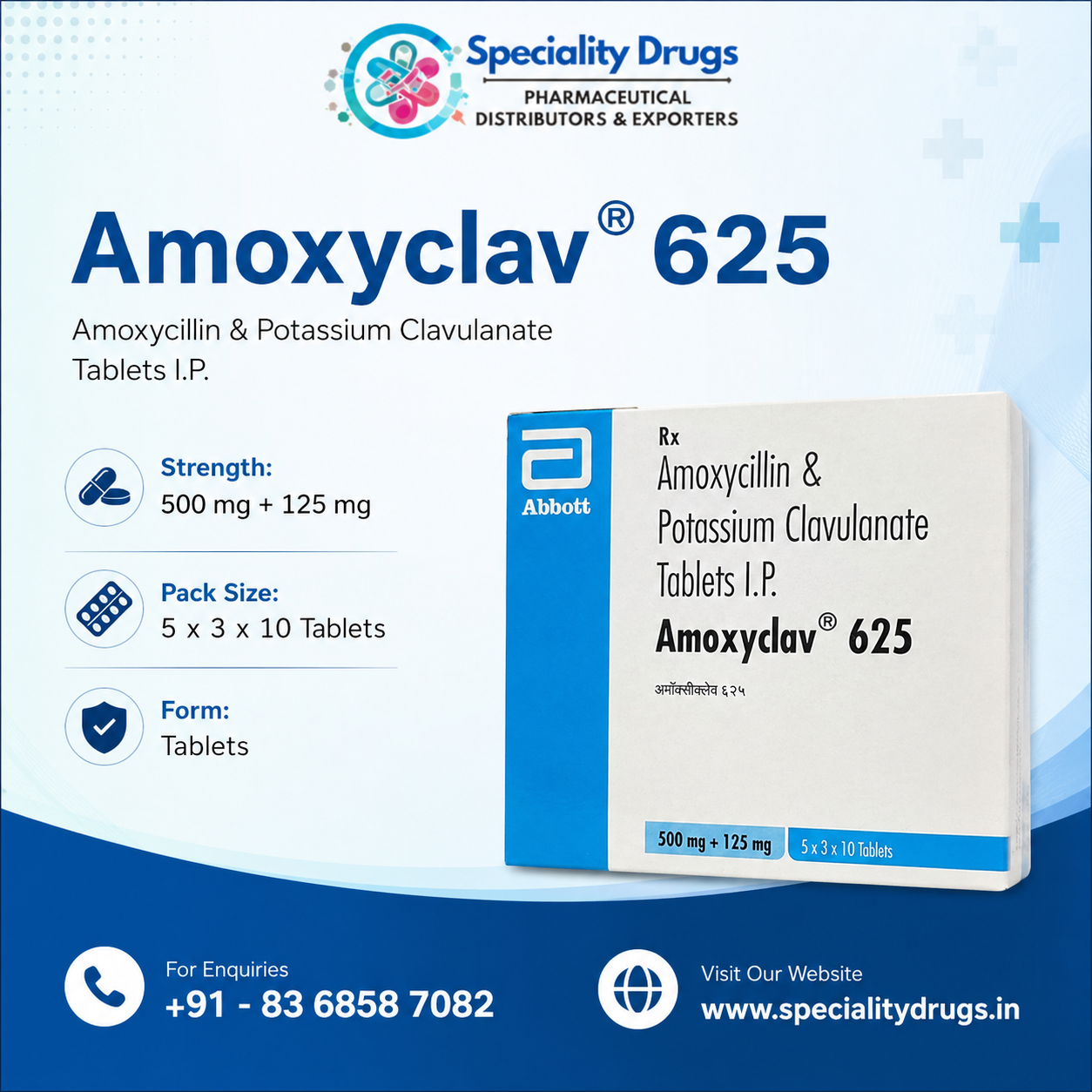
The product shown contains amoxicillin 500 mg and clavulanic acid 125 mg in tablet form. Abbott’s pharmaceutical information also lists the 500 mg + 125 mg amoxicillin/clavulanate combination among its anti-infective products.
What is Amoxyclav 625 Tablet?
Amoxyclav 625 Tablet is a prescription antibiotic containing two active components: amoxicillin and clavulanic acid. Amoxicillin belongs to the penicillin family of antibiotics and works against susceptible bacteria. Clavulanic acid helps protect amoxicillin from certain bacterial enzymes called beta-lactamases, which can otherwise make some bacteria resistant to amoxicillin.
This combination is commonly prescribed when a bacterial infection is suspected or confirmed and the healthcare professional considers this antibiotic appropriate. Depending on the infection, amoxicillin/clavulanate may be used for certain bacterial infections involving the respiratory tract, ears, sinuses, urinary tract, skin and soft tissues. It does not treat viral illnesses such as ordinary colds or influenza.
The pack shown is marked 500 mg + 125 mg and identifies Abbott branding. The National Pharmaceutical Pricing Authority has also documented Amoxyclav as a 625 mg tablet containing amoxicillin trihydrate with clavulanic acid potassium salt.
Amoxyclav 625 should be used only when prescribed or recommended by a qualified healthcare professional. Antibiotics should not be self-started simply because symptoms appear similar to a previous infection.
Uses of Amoxyclav 625 Tablet
Amoxyclav 625 may be prescribed for susceptible bacterial infections such as:
- Certain respiratory tract infections
- Some sinus infections
- Certain middle-ear infections
- Selected urinary tract infections
- Some bacterial skin and soft-tissue infections
- Other bacterial infections when the treating healthcare professional considers amoxicillin/clavulanate appropriate
The exact indication depends on the type of bacteria, infection site, medical history and individual patient factors.
Important: Amoxyclav is an antibacterial medicine and is not useful for viral infections such as the common cold.
This medicine should only be taken under the supervision of a qualified healthcare professional.
Benefits of Amoxyclav 625 Tablet
When appropriately prescribed for a susceptible bacterial infection, Amoxyclav 625 can offer several therapeutic benefits:
- Helps eliminate susceptible bacteria causing infection
- Combines the antibacterial activity of amoxicillin with beta-lactamase inhibition
- May be useful against certain infections where amoxicillin alone may not provide adequate coverage
- Can support recovery from an appropriately diagnosed bacterial infection
- May help reduce infection-related symptoms as the underlying bacterial infection improves
These benefits depend on the bacteria involved and whether the medicine is appropriate for that particular infection. It should not be considered a universal treatment for infections.
How Does Amoxyclav 625 Work?
Amoxicillin works by interfering with the formation of the bacterial cell wall. Without a properly formed cell wall, susceptible bacteria cannot maintain their structure and may die.
Some bacteria produce beta-lactamase enzymes that can break down certain penicillin antibiotics. Clavulanic acid inhibits some of these enzymes, helping protect amoxicillin from enzymatic breakdown. This allows the antibiotic combination to remain effective against certain beta-lactamase-producing bacteria.
The medicine therefore uses two complementary mechanisms: amoxicillin provides antibacterial activity, while clavulanic acid helps overcome particular bacterial resistance mechanisms.
How to Take Amoxyclav 625 Tablet
Because this is a prescription antibiotic, the appropriate dose and treatment duration must be determined by the prescribing healthcare professional. The required regimen can vary according to the infection, kidney function, age, medical history and other factors.
General safety guidance includes:
- Take the medicine exactly as prescribed.
- Do not change the prescribed amount or treatment duration yourself.
- Do not share antibiotics with another person.
- Do not use leftover antibiotics for a new illness.
- If you forget a dose, follow the instructions provided by your healthcare professional or medicine label rather than taking extra medicine on your own.
- Complete the prescribed course unless your healthcare professional tells you otherwise.
The product information available for Amoxyclav 625 recommends taking it with a meal to reduce the likelihood of stomach upset.
Amoxyclav 625 Side Effects
Like all medicines, Amoxyclav 625 may cause side effects, although not everyone experiences them.
Common Side Effects
Possible side effects include:
- Nausea
- Vomiting
- Diarrhea
- Stomach discomfort or indigestion
- Headache
- Mild gastrointestinal upset
- Fungal overgrowth such as oral or vaginal candidiasis in some people
These effects are among those reported with amoxicillin/clavulanate products.
Serious Side Effects
Seek urgent medical attention if there are signs of a serious allergic reaction, severe skin reaction, significant breathing difficulty, facial or throat swelling, or other severe symptoms.
Serious antibiotic-associated diarrhea, liver-related problems, or severe allergic reactions can also occur and require prompt medical assessment.
If side effects persist or become severe, contact your healthcare provider promptly.
Warnings and Precautions
Before using Amoxyclav 625, tell your healthcare professional if you:
- Have previously experienced an allergy to penicillin, amoxicillin, clavulanate or related antibiotics
- Have kidney disease
- Have liver disease or previous antibiotic-associated liver problems
- Have experienced significant gastrointestinal problems with antibiotics
- Are pregnant or planning pregnancy
- Are breastfeeding
- Are taking several prescription or non-prescription medicines
- Are an older adult with significant medical conditions
Patients with previous serious reactions to beta-lactam antibiotics require particular caution. Kidney or liver problems may also affect how treatment is selected and monitored.
Alcohol does not make an antibiotic more effective, and drinking alcohol while unwell may worsen certain symptoms. Discuss alcohol use with a healthcare professional if you are receiving treatment.
If the medicine causes dizziness or another symptom that affects alertness, avoid activities requiring full concentration until you know how you respond.
Drug Interactions
Amoxicillin/clavulanate can interact with certain medicines. Always tell your doctor or pharmacist about everything you take, including:
- Prescription medicines
- Over-the-counter medicines
- Vitamins
- Herbal products
- Other antibiotics
Particular medicines may require additional consideration, including warfarin, methotrexate, allopurinol and certain other prescription treatments. Your healthcare professional can determine whether any adjustment or monitoring is required.
Never assume that an antibiotic is safe to combine with another medicine simply because both were previously prescribed to you.
Storage Instructions
For the tablet product, follow the storage instructions printed on the package or supplied by the pharmacist. Product information for Amoxyclav 625 commonly specifies storage below 25°C.
General precautions include:
- Keep the medicine in its original packaging.
- Protect it from excessive heat, moisture and direct sunlight.
- Keep it out of reach of children.
- Do not use tablets after their expiry date.
- Do not use tablets if the packaging is damaged or the medicine appears abnormal.
Amoxyclav 625 Price and Manufacturer
The product shown is Amoxyclav 625 Tablet, containing amoxicillin 500 mg plus clavulanic acid 125 mg, and is associated with Abbott. Current retail prices can vary according to pack size, pharmacy, location and applicable price regulations, so a displayed online price should not be treated as a universal price.
For prescription medicines, purchasing decisions should be made through appropriate, licensed healthcare and pharmacy channels.
Frequently Asked Questions
1. What is Amoxyclav 625 used for?
Amoxyclav 625 is an antibiotic used for certain bacterial infections. Depending on the clinical situation, it may be prescribed for susceptible respiratory, sinus, ear, urinary, skin and soft-tissue infections. It does not treat viral infections such as the common cold.
2. How does Amoxyclav 625 work?
It combines amoxicillin with clavulanic acid. Amoxicillin interferes with bacterial cell-wall formation, while clavulanic acid blocks certain beta-lactamase enzymes produced by bacteria. This combination can help amoxicillin remain effective against some bacteria that produce these enzymes.
3. Is Amoxyclav 625 safe?
It can be appropriate when prescribed for the right patient and infection, but it is not suitable for everyone. People with penicillin allergies, kidney or liver problems, or certain medication interactions may require special assessment. A healthcare professional should determine whether it is appropriate.
4. Can Amoxyclav 625 be taken long term?
Antibiotics should not be taken longer than prescribed. The appropriate treatment duration depends on the infection and clinical circumstances. Unnecessary or prolonged antibiotic exposure can increase the risk of side effects and contribute to antibiotic resistance.
5. What happens if I miss a dose?
If a prescribed dose is missed, follow the instructions provided by your healthcare professional or the medicine label. Do not automatically take extra medicine to compensate. If you are unsure what to do, ask a pharmacist or doctor.
6. Can I stop Amoxyclav 625 suddenly?
Do not independently change or stop an antibiotic treatment plan. If you develop a serious reaction or have concerns about continuing treatment, contact your healthcare professional promptly for advice.
7. Can Amoxyclav 625 be taken with food?
Product information commonly recommends taking amoxicillin/clavulanate with a meal to reduce stomach-related discomfort. Follow the specific instructions provided with your prescription and product packaging.
8. What are the common Amoxyclav 625 side effects?
Commonly reported effects include nausea, vomiting, diarrhea, stomach discomfort and headache. Some people may also develop candidiasis. Persistent, severe or unusual symptoms should be discussed with a healthcare professional.
9. Who should avoid Amoxyclav 625?
People with a history of serious allergy to penicillin or related beta-lactam antibiotics may need to avoid it. People with kidney or liver disease may also require individualized medical assessment. Always provide your complete medical history to the prescriber.
10. How should Amoxyclav 625 be stored?
Store the tablets according to the package instructions. Product information commonly recommends storage below 25°C and protection from unsuitable environmental conditions. Keep the medicine away from children and do not use it after the expiry date.
Disclaimer
This information about Amoxyclav 625 Tablet is provided for educational purposes only and is not a substitute for medical advice, diagnosis or treatment. Amoxyclav 625 is a prescription antibiotic and should be used only according to the advice of a qualified healthcare professional.
Do not self-medicate, reuse an old antibiotic prescription, share antibiotics with others, or alter the prescribed treatment without professional advice. Individual responses to medicines can vary, and the suitability of treatment depends on the patient’s medical history, diagnosis, other medicines and other clinical factors.



Reviews
There are no reviews yet.