
ck Size: 5 × 5 mL
Important: Metolar Injection is a prescription medicine intended for intravenous administration by qualified healthcare professionals. It should not be self-administered. The information below is for educational purposes and does not replace medical advice.
What is Metolar Injection?
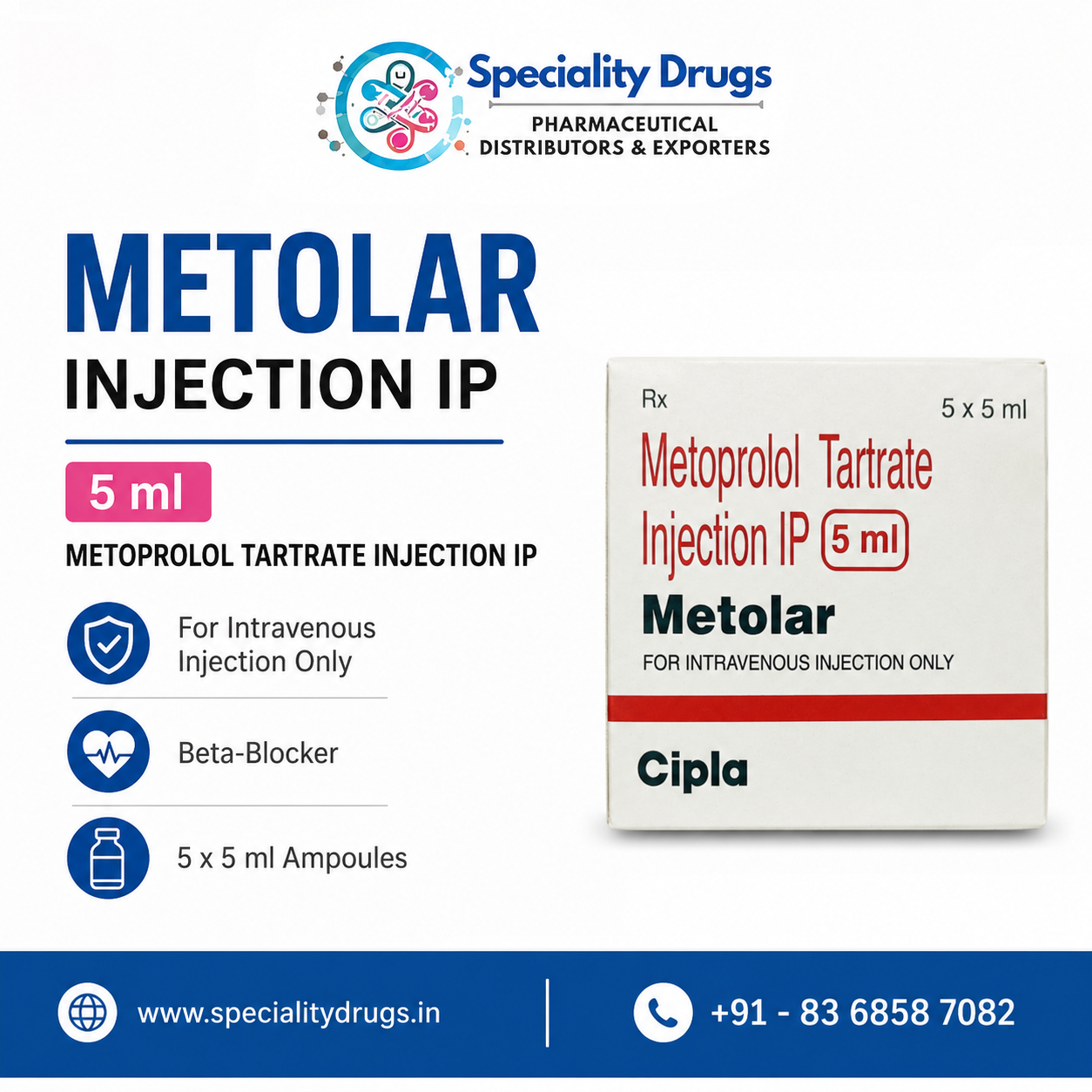
Metolar Injection contains metoprolol tartrate, a medicine belonging to the beta-adrenergic receptor blocker (beta-blocker) class. The product shown contains 5 mg of metoprolol tartrate in a 5 mL ampoule, equivalent to 1 mg/mL. It is manufactured by Cipla Ltd.
Metoprolol works mainly by blocking beta-1 adrenergic receptors in the heart. These receptors normally respond to stress hormones such as adrenaline. By reducing this stimulation, metoprolol can slow the heart rate, reduce the force with which the heart contracts, and decrease the heart’s workload.
Metoprolol tartrate injection has an important role in hospital-based cardiovascular care. Current prescribing information specifically describes its use in hemodynamically stable patients with definite or suspected acute myocardial infarction (heart attack), where it may be used with subsequent oral metoprolol treatment to reduce cardiovascular mortality.
Because intravenous beta-blocker treatment can significantly affect heart rate and blood pressure, Metolar Injection should only be administered when a doctor considers it appropriate and where suitable cardiovascular monitoring is available.
Uses of Metolar Injection
The Metolar Injection uses depend on the patient’s clinical condition and the prescribing information applicable in the country.
A recognized use of metoprolol tartrate injection is:
- Management of definite or suspected acute myocardial infarction in hemodynamically stable patients, as part of appropriate hospital treatment.
- It may be used as part of a treatment plan that subsequently transitions the patient to an oral metoprolol formulation.
Metoprolol tablets and other formulations can have additional approved indications, but these should not automatically be assumed to apply to the injectable formulation.
This medicine should only be used under the supervision of a qualified healthcare professional.
Benefits of Metolar Injection
The potential Metolar Injection benefits are related to the cardiovascular effects of metoprolol.
- Helps reduce excessive beta-adrenergic stimulation of the heart.
- Slows an elevated heart rate when clinically appropriate.
- Reduces the workload and oxygen demand of the heart.
- Can form part of hospital management following an acute myocardial infarction in appropriate, stable patients.
- Provides a rapidly administered intravenous formulation when intravenous beta-blocker treatment is medically indicated.
The benefits and risks vary according to the patient’s blood pressure, heart rhythm, cardiac function, and overall medical condition. It should not be considered a medicine that independently cures a heart attack or other cardiovascular disease.
How Does Metolar Injection Work?
Metoprolol is a relatively selective beta-1 adrenergic receptor blocker at usual therapeutic concentrations. Beta-1 receptors are found predominantly in the heart.
When adrenaline and related hormones stimulate these receptors, the heart tends to beat faster and contract more strongly. Metoprolol reduces this stimulation. As a result, it can:
- Slow the heart rate.
- Reduce the force of cardiac contraction.
- Lower the workload of the heart.
- Reduce myocardial oxygen demand.
- Decrease certain stress-related effects on the cardiovascular system.
Because these effects can also lower blood pressure and excessively slow the heart, intravenous administration requires appropriate clinical assessment and monitoring. Official prescribing information recommends monitoring blood pressure, heart rate, and electrocardiogram during intravenous treatment.
How to Take Metolar Injection
Metolar Injection is for intravenous use only and is administered by a healthcare professional.
Patients should not attempt to inject this medicine themselves. The appropriate Metolar Injection dosage depends on the clinical situation and factors such as heart rate, blood pressure, cardiac conduction, and overall cardiovascular stability.
During intravenous administration, medical professionals may monitor:
- Blood pressure
- Heart rate
- Heart rhythm/ECG
- Signs of worsening heart failure
- Overall clinical response
The prescribing information describes intravenous treatment as being initiated in an appropriately monitored clinical setting in suitable patients.
Never change, repeat, or discontinue treatment without medical direction.
Metolar Injection Side Effects
Like all medicines, Metolar Injection may cause side effects, although not everyone experiences them.
Common or Possible Side Effects
Depending on the patient and treatment circumstances, possible effects include:
- Slow heartbeat (bradycardia)
- Low blood pressure
- Dizziness or light-headedness
- Tiredness or weakness
- Shortness of breath
- Cold hands or feet
- Changes in sleep or mood
Because this is an intravenous beta-blocker, the healthcare team will assess the patient’s cardiovascular response during treatment.
Serious Side Effects
Serious reactions can include:
- Severe slowing of the heartbeat
- Heart block or significant conduction problems
- Severe low blood pressure
- Worsening or decompensated heart failure
- Cardiogenic shock
- Serious allergic reaction
- Bronchospasm, particularly in susceptible individuals
The official prescribing information warns that clinically significant bradycardia and worsening cardiac failure can occur with metoprolol tartrate injection.
If side effects persist or become severe, contact your healthcare provider promptly.
Warnings and Precautions
Metolar Injection requires careful medical assessment before administration.
Heart Conditions
It may be unsuitable for people with severe bradycardia, significant heart block, certain conduction disorders, cardiogenic shock, or decompensated heart failure. The prescribing information lists important cardiovascular contraindications.
Breathing Problems
Beta-blockers can worsen bronchospasm in susceptible individuals. Patients with asthma or other bronchospastic conditions should tell their healthcare professional before treatment.
Liver Disease
Metoprolol is metabolized extensively by the liver. People with significant liver impairment may require careful medical assessment.
Diabetes
Beta-blockers may mask some warning symptoms of low blood sugar, particularly a rapid heartbeat. People with diabetes should inform their healthcare team.
Pregnancy and Breastfeeding
Pregnant or breastfeeding individuals should discuss metoprolol treatment with a qualified healthcare professional. The doctor will consider the potential benefits and risks before treatment.
Elderly Patients
Older adults may be more sensitive to changes in blood pressure and heart rate and may require closer monitoring.
Driving and Machinery
Dizziness or tiredness may occur. Patients should follow their healthcare professional’s advice about activities requiring alertness.
Alcohol
Alcohol may increase dizziness or contribute to blood-pressure-related symptoms in some people. Discuss alcohol use with a healthcare professional.
Drug Interactions
Metoprolol can interact with other medicines. Before receiving Metolar Injection, the healthcare professional should know about all medicines being used, including:
- Other medicines that lower blood pressure or heart rate
- Certain calcium-channel blockers, such as verapamil or diltiazem
- Medicines affecting heart rhythm
- Certain antidepressants and other medicines that affect metoprolol metabolism
- Medicines used for diabetes
- Other beta-blockers
- Herbal products, vitamins, and supplements
Do not start, stop, or combine medicines without professional advice.
Metolar Injection Price
The Metolar Injection price can vary according to location, pharmacy, pack size, taxes, and current manufacturer pricing. The photograph supplied with this product description shows an MRP of Rs. 18.15 per ampoule on the displayed pack. Prices can change, so the current printed MRP and authorized pharmacy information should be checked before purchase.
Metolar Injection Manufacturer
The product shown in the supplied packaging is manufactured by Cipla Ltd., with the packaging indicating its manufacturing facility at Paonta Sahib, Himachal Pradesh, India.
Storage Instructions
Follow the storage instructions printed on the product packaging and accompanying leaflet.
General precautions include:
- Store as directed by the manufacturer.
- Protect the medicine from light as indicated on the packaging.
- Keep the product in its original packaging where appropriate.
- Keep out of reach of children.
- Inspect the injection before administration for unusual discoloration or particles when appropriate.
- Do not use the medicine after its expiry date.
- Healthcare professionals should follow applicable institutional storage and handling requirements.
Frequently Asked Questions
1. What is Metolar Injection used for?
Metolar Injection contains metoprolol tartrate, a beta-blocker administered intravenously. Its recognized use includes treatment of definite or suspected acute myocardial infarction in appropriate hemodynamically stable patients. It is generally used in a monitored healthcare setting and should not be self-administered.
2. How does Metolar Injection work?
Metolar Injection blocks beta-1 adrenergic receptors in the heart. This reduces the effects of adrenaline and can slow the heart rate and decrease the force of contraction. These actions reduce the workload and oxygen demand of the heart.
3. Is Metolar Injection safe?
Metolar Injection can be appropriate when prescribed for a suitable patient and administered under professional supervision. However, it can cause significant changes in heart rate and blood pressure. Certain heart conditions and other medical problems may make it unsuitable.
4. Can Metolar Injection be used long term?
The injectable form is generally used for specific clinical situations rather than as a routine long-term self-administered treatment. After appropriate intravenous treatment, a doctor may transition a patient to an oral metoprolol formulation when clinically appropriate.
5. What happens if I miss a dose?
Because Metolar Injection is administered by healthcare professionals, patients generally do not manage individual injection doses themselves. If you believe a scheduled hospital treatment has been missed, speak with the treating medical team rather than attempting to compensate for it.
6. Can Metolar Injection be stopped suddenly?
Patients should not independently stop or alter prescribed beta-blocker treatment. If ongoing metoprolol therapy needs to be changed, the healthcare professional should determine the appropriate approach based on the patient’s condition.
7. Can Metolar Injection be taken with food?
Metolar Injection is administered intravenously, so food does not affect the administration of the injection itself. If treatment is later changed to oral metoprolol, follow the specific instructions supplied for that formulation.
8. What are the common Metolar Injection side effects?
Possible effects include slow heart rate, low blood pressure, dizziness, tiredness, weakness, and shortness of breath. More serious cardiovascular reactions can occur, which is why intravenous treatment requires appropriate clinical monitoring.
9. Who should avoid Metolar Injection?
It may be contraindicated in people with severe bradycardia, significant heart block, certain conduction disorders, cardiogenic shock, decompensated heart failure, or hypersensitivity to metoprolol or related ingredients. A doctor must assess suitability before administration.
10. How should Metolar Injection be stored?
Metolar Injection should be stored according to the manufacturer’s instructions on the packaging and leaflet. The supplied pack advises protection from light and storage in a cool, dry place. Keep it away from children and do not use it after the expiry date.
Disclaimer
This product description is provided for educational and informational purposes only. It is not a substitute for diagnosis, treatment, or individualized medical advice. Metolar Injection is a prescription medicine and should only be administered by qualified healthcare professionals according to a doctor’s prescription and applicable clinical protocols.
Do not self-medicate, self-inject, change the prescribed treatment, or use this medicine for a condition without professional guidance. Individual responses to metoprolol can vary depending on age, medical history, heart rate, blood pressure, other medicines, and overall health. Always consult a qualified healthcare professional for advice specific to your situation.


Reviews
There are no reviews yet.