
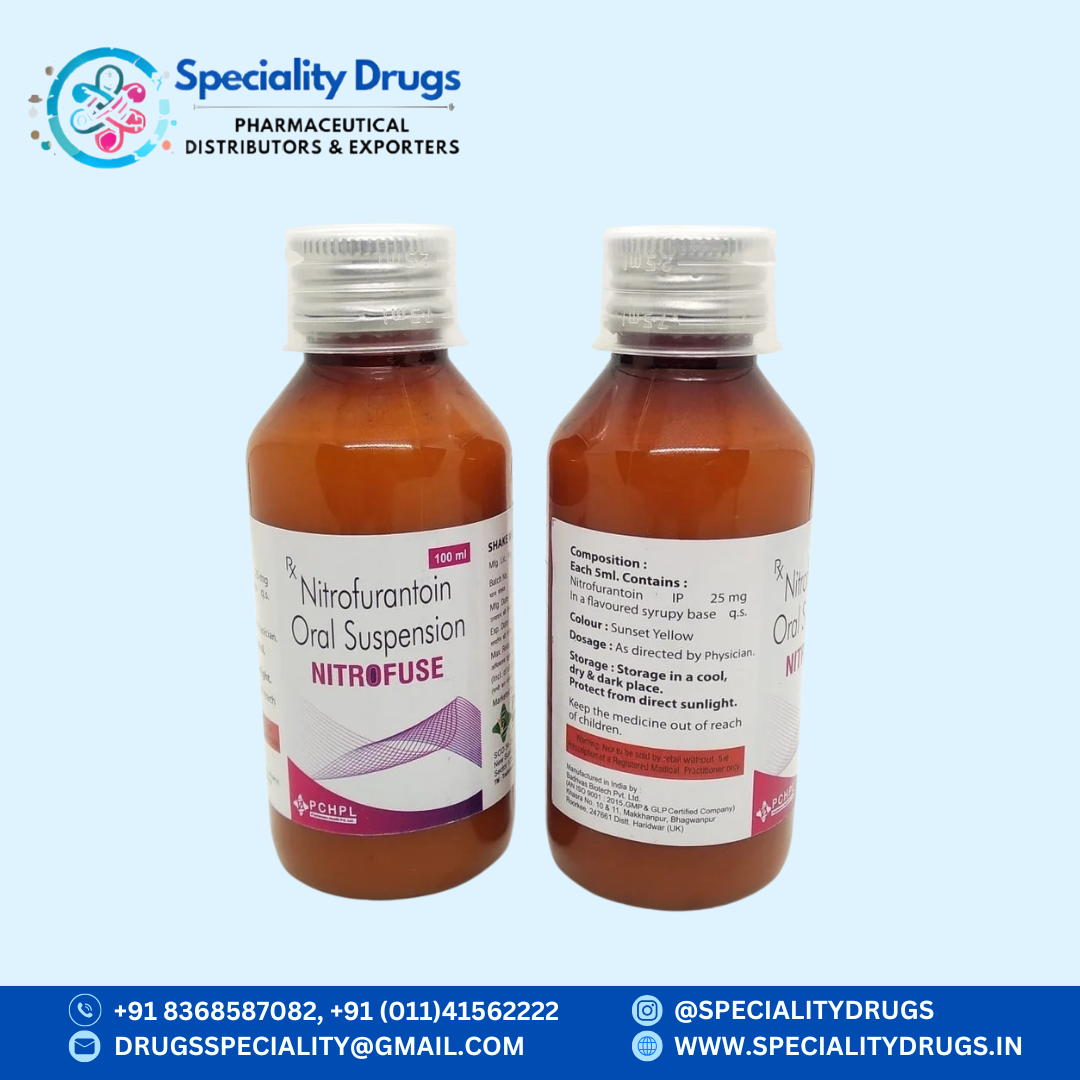
What is Nitrofuse?
Nitrofuse is a prescription medication used in emergency and critical care settings to manage acute heart-related conditions. It works by relaxing blood vessels, allowing blood to flow more easily and reducing the workload on the heart.
What is the Use of Nitrofuse?
Nitrofuse is commonly used for:
-
Hypertensive emergencies
-
Acute heart failure
-
Controlled blood pressure reduction during surgery
-
Management of severe angina and cardiac stress
It is usually administered intravenously in hospitals under strict medical supervision.
Benefits of Nitrofuse
-
Provides rapid blood pressure control
-
Reduces strain on the heart
-
Improves blood flow and oxygen delivery
-
Effective in critical and emergency situations
-
Allows precise dose control in monitored settings
Side Effects of Nitrofuse
Common side effects may include:
-
Headache
-
Nausea or vomiting
-
Dizziness or flushing
Serious side effects (seek immediate medical attention):
-
Severe hypotension (very low blood pressure)
-
Cyanide toxicity with prolonged or high-dose use
-
Irregular heartbeat
Disclaimer
This information is for educational purposes only. Nitrofuse should be administered only by qualified healthcare professionals in a hospital setting. Dosage and monitoring must follow medical guidelines.
Frequently Asked Question:
1. What is Nitrofuse used for?
Nitrofuse is used to treat hypertensive emergencies, acute heart failure, and severe angina in hospital settings.
2. How does Nitrofuse work?
Nitrofuse works by relaxing and widening blood vessels, which improves blood flow and lowers blood pressure quickly.
3. Is Nitrofuse used for emergency treatment?
Yes, Nitrofuse is commonly used in critical care and emergency situations requiring rapid blood pressure control.
4. How is Nitrofuse administered?
Nitrofuse is given intravenously (IV) and must be administered by trained healthcare professionals.
5. What are the common side effects of Nitrofuse?
Common side effects include headache, dizziness, flushing, nausea, and vomiting.
6. Are there serious side effects of Nitrofuse?
Serious side effects may include severe low blood pressure, irregular heartbeat, or cyanide toxicity with prolonged use.
7. Who should not receive Nitrofuse?
Patients with severe hypotension or known hypersensitivity should not receive Nitrofuse unless advised by a doctor.
8. Is Nitrofuse safe for long-term use?
Nitrofuse is typically used for short-term treatment only under close medical monitoring.
9. Can Nitrofuse be used during surgery?
Yes, it is often used to control blood pressure during surgical procedures.
10. What monitoring is required during Nitrofuse therapy?
Continuous monitoring of blood pressure, heart rate, and metabolic status is essential during treatment.

Reviews
There are no reviews yet.