
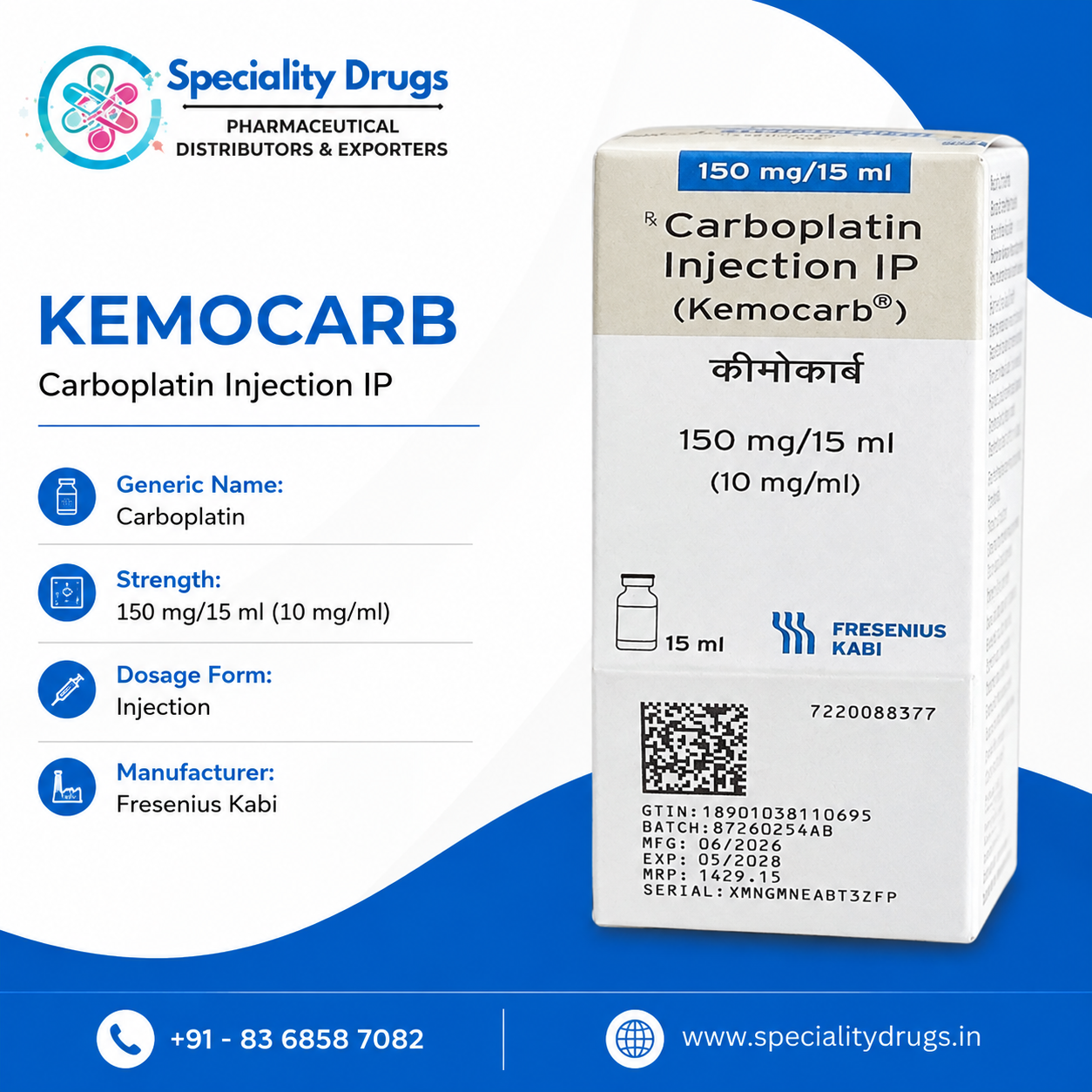
What is Kemocarb 150 mg/15 mL Injection?
Kemocarb 150 mg/15 mL Injection contains carboplatin, a platinum-based anticancer medicine used as part of chemotherapy. The product shown contains 150 mg of carboplatin in 15 mL, equivalent to 10 mg/mL. It is manufactured by Fresenius Kabi and is supplied as an intravenous preparation. Fresenius Kabi identifies Kemocarb as a platinum-based antineoplastic medicine.
Carboplatin belongs to a group of medicines known as platinum compounds. These medicines work by damaging the DNA of cancer cells. Because cancer cells need to copy their DNA in order to grow and divide, DNA damage can prevent these cells from continuing to multiply and can ultimately lead to their death.
Kemocarb is not a general-purpose medicine and is not intended for self-treatment. It is a prescription chemotherapy medicine that is administered in a hospital or specialist healthcare setting by appropriately trained healthcare professionals. The choice of treatment depends on the type and stage of cancer, previous treatments, kidney function, blood-cell counts, overall health, and the other medicines being used.
Uses of Kemocarb
Carboplatin has established uses in cancer chemotherapy. The Fresenius Kabi information specifically identifies its use in the treatment of advanced ovarian carcinoma, including initial treatment in combination with other approved chemotherapy medicines and treatment of recurrent ovarian carcinoma in appropriate patients.
Depending on the cancer type and treatment protocol, carboplatin may also be used by oncology specialists in combination chemotherapy regimens for other malignancies. Such uses should be determined by the treating oncology team according to the applicable treatment protocol and local prescribing information.
Potential clinical uses include:
- Treatment of certain advanced cancers as part of chemotherapy.
- Treatment of appropriate recurrent cancers following previous therapy.
- Combination treatment with other anticancer medicines when clinically indicated.
- Palliative treatment in selected patients with recurrent disease.
The exact role of carboplatin varies between patients and cancer types. It should only be administered under the supervision of a qualified healthcare professional experienced in cancer chemotherapy.
Benefits and Clinical Role of Kemocarb
The main clinical benefit of carboplatin is its ability to interfere with the growth and survival of susceptible cancer cells.
Depending on the cancer and treatment plan, carboplatin may:
- Help slow or stop the growth of cancer cells.
- Contribute to reduction of tumor burden in responsive cancers.
- Form part of combination chemotherapy designed to improve cancer control.
- Provide an alternative platinum-based treatment when selected by an oncology specialist.
- Support palliative treatment when the goal is to control disease and symptoms rather than cure.
Response to chemotherapy varies considerably between individuals. Carboplatin should therefore not be described as guaranteeing a cure or a particular treatment outcome.
How Does Carboplatin Work?
Carboplatin is a platinum coordination compound. After administration, it undergoes chemical changes that allow it to interact with cellular DNA.
The resulting platinum-DNA interactions can create cross-links within DNA. These changes interfere with the normal processes required for DNA replication and repair. Cancer cells that cannot successfully repair this damage may stop dividing and eventually die.
Although carboplatin and cisplatin belong to the same broad platinum class, they differ in their chemical properties and toxicity profiles. Carboplatin is commonly selected as part of specific chemotherapy protocols according to the patient’s cancer diagnosis and clinical circumstances.
How is Kemocarb Administered?
Kemocarb is an intravenous chemotherapy medicine. It is not a tablet, capsule, or medicine intended for administration by patients at home.
The treatment schedule and amount administered are individually determined by the oncology team. Factors such as the patient’s kidney function, blood counts, previous chemotherapy, age, general health, cancer type, and combination medicines may influence treatment decisions.
Because carboplatin can cause significant suppression of blood-cell production, laboratory monitoring is an important part of treatment. Blood counts and kidney function may be assessed before and during therapy so that the healthcare team can determine whether treatment can safely continue.
Patients should never attempt to calculate, prepare, dilute, or administer carboplatin themselves.
Side Effects of Kemocarb
Like other chemotherapy medicines, carboplatin can cause side effects. Their severity varies between patients and may depend on the treatment regimen and other medicines given at the same time.
Common or Important Side Effects
Potential adverse effects include:
- Reduced white blood-cell counts
- Reduced platelet counts
- Anemia
- Nausea and vomiting
- Fatigue or weakness
- Changes in taste
- Reduced appetite
- Temporary changes in kidney or liver laboratory tests
- Hair loss in some treatment regimens
- Peripheral nerve symptoms in some patients
- Changes in hearing in susceptible patients
One of the most important toxicities associated with carboplatin is bone-marrow suppression. This can lower white blood cells, platelets, and red blood cells. Lower white-cell counts can increase susceptibility to infection, while low platelet counts can increase bleeding risk.
Serious Reactions
Serious complications can occur and require prompt medical assessment. These may include:
- Severe allergic or hypersensitivity reactions
- Severe reduction in blood-cell counts
- Serious infection associated with low white-cell counts
- Significant bleeding associated with low platelet counts
- Severe anemia
- Kidney-related complications
- Significant hearing problems, particularly in certain treatment combinations
- Severe neurological or other treatment-related complications
Hypersensitivity reactions can occur during or shortly after administration. Healthcare facilities administering carboplatin should therefore have appropriate personnel and facilities available to manage serious reactions.
If a patient receiving chemotherapy develops a high fever, unusual bleeding, severe weakness, breathing difficulty, facial swelling, or another serious or rapidly worsening symptom, urgent medical assessment is appropriate.
Warnings and Precautions
Carboplatin requires careful medical supervision.
Kidney Function
Kidney function is particularly important because impaired renal function can increase exposure to carboplatin and increase the risk of bone-marrow toxicity. Patients with reduced kidney function may require individualized treatment decisions and closer monitoring.
Blood Counts
Regular blood testing is important because carboplatin can cause neutropenia, thrombocytopenia, and anemia. Treatment decisions may depend on whether blood-cell counts have recovered adequately.
Previous Platinum Allergy
Patients who have previously experienced severe allergic reactions to platinum-containing medicines need careful evaluation before carboplatin is considered. Carboplatin is contraindicated in patients with certain severe hypersensitivity histories involving platinum compounds.
Pregnancy
Carboplatin can potentially harm a developing fetus. Anyone who is pregnant, planning pregnancy, or who could become pregnant should discuss this with the oncology team before treatment.
Breastfeeding
Breastfeeding considerations should be discussed with the treating physician because anticancer medicines can present risks to a nursing infant.
Older Adults
Older patients may require particular attention to kidney function, blood counts, general health, and other medicines because these factors can influence chemotherapy tolerance.
Driving and Daily Activities
Carboplatin treatment can cause fatigue, weakness, nausea, or other symptoms that may affect normal activities. Patients should follow their healthcare professional’s advice regarding driving and other activities if treatment-related symptoms occur.
Drug Interactions
Carboplatin may interact with other medicines or treatments. Patients should provide their healthcare team with a complete list of:
- Prescription medicines
- Over-the-counter medicines
- Vitamins and nutritional products
- Herbal or traditional medicines
- Other chemotherapy medicines
- Medicines used for kidney or other chronic conditions
Particular caution may be necessary when carboplatin is combined with medicines that can affect the kidneys, hearing, bone marrow, or nervous system. The official prescribing information notes increased renal and/or auditory toxicity with certain concomitant medicines, including aminoglycoside antibiotics.
Patients should not start, stop, or change another medicine without discussing it with their healthcare team.
Storage and Handling
Kemocarb is a sterile injectable chemotherapy product and should be stored and handled according to the manufacturer’s approved product information and institutional procedures.
Important general principles include:
- Keep the product in its original packaging as appropriate.
- Protect it according to the manufacturer’s storage requirements.
- Keep medicines away from children and unauthorized users.
- Do not use a product after its expiry date.
- Do not use a vial if its packaging or container appears damaged.
- Preparation and administration should be performed by trained healthcare professionals following appropriate cytotoxic-drug handling procedures.
Carboplatin can also react with aluminum, and Fresenius Kabi specifically warns that needles or intravenous sets containing aluminum parts that may contact the medicine should not be used for its preparation or administration.
Important Information About Kemocarb
Kemocarb is a specialist chemotherapy medicine, not a medicine for routine self-care. Its use requires an appropriate cancer diagnosis, an individualized treatment plan, laboratory monitoring, and medical supervision.
The 150 mg/15 mL presentation shown on the package should not be interpreted as an appropriate dose for a particular patient. Chemotherapy dosing is individualized by the treating oncology team, and the quantity administered may depend on several clinical factors.
Frequently Asked Questions
1. What is Kemocarb 150 mg/15 mL used for?
Kemocarb contains carboplatin, a platinum-based chemotherapy medicine. Fresenius Kabi identifies it for use in advanced and recurrent ovarian carcinoma in appropriate treatment settings. Carboplatin may also form part of other specialist chemotherapy protocols depending on the cancer diagnosis.
2. What is the active ingredient in Kemocarb?
The active ingredient is carboplatin. The product shown contains 150 mg of carboplatin in 15 mL, corresponding to a concentration of 10 mg/mL.
3. How does carboplatin work?
Carboplatin damages cancer-cell DNA by forming platinum-related DNA cross-links. This interferes with DNA replication and repair and can prevent susceptible cancer cells from growing and dividing.
4. Is Kemocarb safe?
Carboplatin can be an important cancer treatment when appropriately prescribed, but it can also cause serious adverse effects. Its use requires specialist supervision, blood-count monitoring, and assessment of factors such as kidney function.
5. What are the important side effects of carboplatin?
Important adverse effects include suppression of bone-marrow activity, which can reduce white blood cells, platelets, and red blood cells. Nausea, vomiting, fatigue, and other treatment-related effects may also occur.
6. Can carboplatin affect the kidneys?
Yes. Carboplatin has renal considerations, and impaired kidney function can increase the risk of serious bone-marrow suppression. Kidney function should therefore be considered when oncology specialists plan treatment.
7. Can carboplatin cause an allergic reaction?
Yes. Hypersensitivity reactions can occur, including potentially serious reactions. Carboplatin should therefore be administered in an appropriate healthcare setting where trained professionals can recognize and manage acute reactions.
8. Can Kemocarb be used during pregnancy?
Carboplatin may pose risks to an unborn baby. Pregnancy status and reproductive considerations should be discussed with the treating oncologist before treatment begins.
9. Should patients take other medicines with carboplatin?
Patients should tell their oncology team about every prescription medicine, over-the-counter medicine, vitamin, and herbal product they use. Some medicines can increase toxicity or interact with the chemotherapy regimen.
10. Who should administer Kemocarb?
Kemocarb should be prepared and administered by appropriately trained healthcare professionals experienced in cancer chemotherapy. It should not be self-administered or used without a qualified medical professional’s direction.
Disclaimer
This information is provided for general educational purposes only and is not a substitute for professional medical advice, diagnosis, or treatment. Kemocarb (carboplatin) is a prescription chemotherapy medicine that requires specialist supervision.
Do not self-medicate, attempt to determine your own chemotherapy dose, or administer this medicine without qualified medical supervision. Treatment decisions should be based on the patient’s diagnosis, laboratory results, kidney function, previous treatments, other medicines, and the judgment of the treating oncology team.
Product availability, approved indications, labeling, and prescribing requirements can vary by country. Always consult the current manufacturer’s information and the treating healthcare professional before using this medicine. Individual responses and side effects may vary.




Reviews
There are no reviews yet.