
Important: Ipoget 1g is a prescription chemotherapy product. Ifosfamide can cause serious blood, nervous-system, kidney, and urinary-tract complications. It must be administered by qualified healthcare professionals under specialist medical supervision.
What is Ipoget 1g Injection with Mesna?
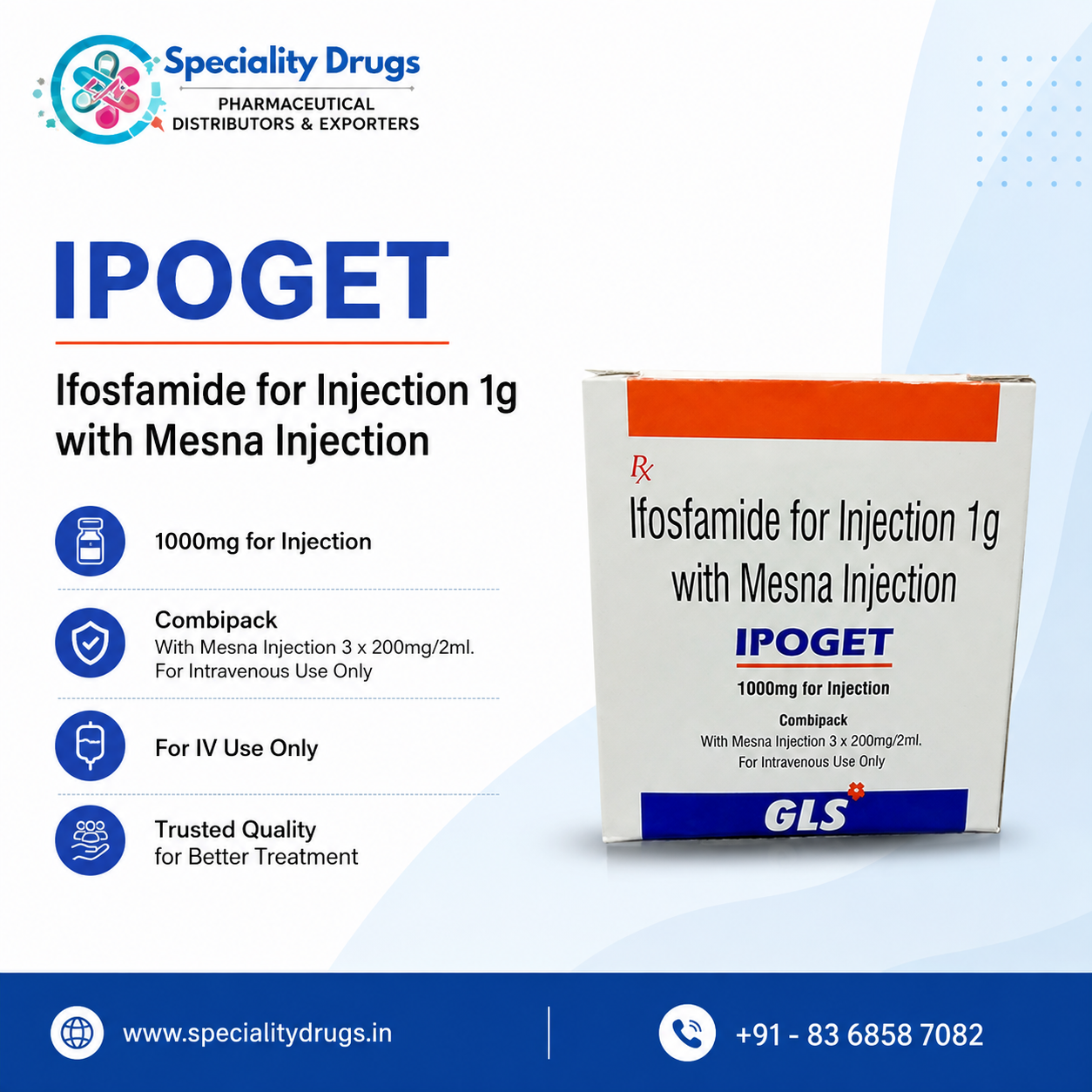
Ipoget 1g Injection is a chemotherapy medicine containing ifosfamide, an alkylating anticancer drug. The supplied packaging identifies the product as Ifosfamide for Injection 1 g with Mesna Injection and indicates intravenous use.
Ifosfamide works by interfering with the genetic material of rapidly dividing cells. This can prevent cancer cells from continuing to grow and multiply. Because chemotherapy medicines can also affect some healthy rapidly dividing cells, treatment requires careful medical monitoring.
Mesna is included as a protective medicine. Ifosfamide can irritate the urinary bladder and may cause a potentially serious condition called hemorrhagic cystitis. Mesna helps protect the urinary tract from this ifosfamide-related toxicity. Official prescribing information specifically recommends administering mesna with ifosfamide to reduce the risk of hemorrhagic cystitis.
Ifosfamide is used as part of combination chemotherapy for certain cancers. Current U.S. prescribing information specifically lists its use, in combination with other approved anticancer medicines, for third-line treatment of germ-cell testicular cancer in adults. In clinical practice, specialist oncologists may use ifosfamide-containing chemotherapy protocols for other malignancies according to the treatment regimen and local guidelines. The exact indication depends on the patient’s cancer type and treatment plan.
Because this is a cytotoxic chemotherapy medicine, Ipoget 1g should never be self-administered or used without an oncologist’s prescription and supervision.
Uses of Ipoget 1g Injection
Ipoget 1g contains ifosfamide, which is used as part of specialist chemotherapy regimens.
Potential uses depend on the cancer type, treatment protocol, previous therapy, and the patient’s overall condition. The approved prescribing information lists ifosfamide in combination with other antineoplastic agents for third-line chemotherapy of germ-cell testicular cancer in adults.
- Treatment of certain cancers as part of combination chemotherapy
- Specialist treatment of germ-cell testicular cancer in appropriate adult patients
- Use within oncology treatment protocols selected by a qualified cancer specialist
The exact indication should always be confirmed by the treating oncologist.
Benefits of Ipoget 1g Injection
The potential benefit of ifosfamide comes from its ability to interfere with the growth and multiplication of susceptible cancer cells.
Depending on the treatment protocol, it may:
- Contribute to cancer-cell growth control
- Form part of combination chemotherapy
- Help achieve the treatment goals established by an oncology team
- Provide anticancer activity against tumors that are sensitive to alkylating chemotherapy
Mesna provides an important supportive benefit by helping reduce the risk of ifosfamide-induced hemorrhagic cystitis.
These benefits do not mean that treatment will cure cancer. Response varies between individuals and depends on factors such as cancer type, disease stage, previous treatments, and overall health.
How Does Ipoget 1g Work?
Ifosfamide belongs to the alkylating-agent class of anticancer medicines. After being activated inside the body, its metabolites can damage DNA within cells. Cancer cells that are unable to repair this damage adequately may stop dividing or die.
This action is not completely selective for cancer cells. Healthy cells that divide rapidly can also be affected, which helps explain some of the significant adverse effects associated with treatment, including suppression of blood-cell production and other organ toxicities.
Mesna works differently. It is a cytoprotective agent used specifically to reduce the risk of ifosfamide-induced hemorrhagic cystitis. It helps protect the urinary tract from reactive ifosfamide metabolites.
How is Ipoget 1g Administered?
Ipoget 1g is an intravenous chemotherapy medicine and is administered by qualified healthcare professionals.
The treatment schedule is not the same for every patient. Oncologists determine the appropriate regimen according to the cancer being treated, other chemotherapy medicines being used, kidney and liver function, blood counts, previous treatment, and individual risk factors.
Ifosfamide treatment requires appropriate hydration and administration of mesna to reduce urinary toxicity. Patients may also require regular blood and organ-function monitoring during treatment.
Patients should never attempt to calculate, prepare, dilute, or administer ifosfamide themselves.
Ipoget 1g Side Effects
Like all medicines, Ipoget 1g may cause side effects, although not everyone experiences them.
Common or Frequently Observed Effects
Possible effects associated with ifosfamide-containing chemotherapy include:
- Nausea or vomiting
- Reduced appetite
- Tiredness or weakness
- Hair loss
- Decreased blood-cell counts
- Increased susceptibility to infections
- Changes in blood-test results
- Urinary symptoms
- Mouth or digestive-tract discomfort
The severity of side effects can vary considerably between patients.
Serious Side Effects
Ifosfamide carries important risks involving the blood, nervous system, kidneys, and urinary tract. Serious complications can include:
- Severe reduction in blood-cell counts and serious infections
- Encephalopathy or other changes in brain function
- Kidney toxicity or kidney failure
- Hemorrhagic cystitis
- Severe urinary-tract toxicity
- Serious allergic reactions
- Heart-related complications
- Lung toxicity
Current prescribing information carries boxed warnings for myelosuppression, encephalopathy, nephrotoxicity, and urotoxicity.
Any concerning symptoms during chemotherapy should be reported promptly to the treating oncology team.
Warnings and Precautions
Pregnancy
Ifosfamide can cause fetal harm. Pregnancy-related precautions are therefore important during treatment. Patients who are pregnant, planning pregnancy, or could become pregnant should discuss this with their oncology team before treatment.
Breastfeeding
Patients receiving ifosfamide should discuss breastfeeding with their doctor. Because chemotherapy can pose risks to an infant, the treating specialist should determine whether breastfeeding should be avoided during treatment.
Kidney Function
Kidney toxicity is an important concern with ifosfamide. Patients with existing kidney problems may require particularly careful assessment and monitoring.
Liver Function
The treating team may monitor liver function and other laboratory parameters as part of chemotherapy care, particularly when other medicines or medical conditions may affect treatment safety.
Blood Counts and Infection
Ifosfamide can suppress bone-marrow activity and reduce blood-cell counts. This may increase the risk of infection and other complications. Blood counts are therefore monitored during treatment.
Nervous System
Ifosfamide can cause encephalopathy, which may involve confusion, changes in awareness, unusual behavior, or other neurological symptoms. Serious cases can occur and require immediate medical assessment.
Heart and Lungs
Cardiac and pulmonary toxicities have also been reported with ifosfamide. Patients with relevant medical histories should make sure their oncology team knows about them before treatment.
Driving and Machinery
If treatment causes dizziness, confusion, weakness, or other effects that impair alertness, potentially hazardous activities should be avoided and medical advice should be sought.
Alcohol
Patients should discuss alcohol use with their oncology team because chemotherapy regimens can involve multiple medicines and organ-related risks.
Drug Interactions
Ifosfamide can interact with other medicines, and its safety can be affected by drugs that influence metabolism, kidney function, blood counts, or the nervous system.
Before receiving Ipoget 1g, the healthcare team should be told about:
- Prescription medicines
- Over-the-counter medicines
- Vitamins and minerals
- Herbal products
- Other cancer medicines
- Previous chemotherapy or radiation treatment
Patients should not start, stop, or change another medicine during chemotherapy without discussing it with their healthcare team.
Storage Instructions
Ipoget 1g is a hospital/clinical-use injectable medicine and should be stored and handled according to the manufacturer’s approved product information and the requirements of the healthcare facility.
General precautions include:
- Keep the medicine in its original approved packaging until required.
- Protect it according to the manufacturer’s storage requirements.
- Keep it away from unauthorized access and children.
- Do not use a product that is expired or has damaged packaging.
- Cytotoxic medicines require appropriate professional handling and disposal procedures.
Healthcare facilities should follow applicable hazardous-drug handling procedures because ifosfamide is classified as a hazardous drug.
Ipoget 1g Price and Manufacturer Information
The supplied package identifies GLS as the manufacturer/brand shown on the product and describes the product as Ifosfamide for Injection 1 g with Mesna Injection.
The price of Ipoget 1g can vary according to supplier, location, availability, taxes, and purchasing arrangements. Because this is a prescription chemotherapy medicine, patients should obtain pricing and supply information through an appropriately authorized healthcare or pharmaceutical channel rather than attempting to self-purchase or self-administer the medicine.
Frequently Asked Questions
1. What is Ipoget 1g Injection used for?
Ipoget 1g contains ifosfamide, an alkylating chemotherapy medicine. It is used in specialist cancer-treatment protocols. Current prescribing information specifically identifies ifosfamide in combination with other approved anticancer medicines for third-line treatment of germ-cell testicular cancer in adults. Other uses depend on specialist oncology protocols.
2. Why does Ipoget 1g contain Mesna?
Mesna is included because ifosfamide can cause urinary-bladder toxicity, including hemorrhagic cystitis. Mesna is a cytoprotective medicine that helps reduce the incidence of ifosfamide-induced hemorrhagic cystitis.
3. Is Ipoget 1g safe?
Ipoget 1g can be used safely in appropriate patients when prescribed and administered by an experienced oncology team, but it has potentially serious toxicities. Important risks include bone-marrow suppression, encephalopathy, kidney toxicity, and bladder toxicity. Careful monitoring is therefore essential.
4. What are the important side effects of Ipoget 1g?
Important adverse effects may include reduced blood counts, infections, nausea, tiredness, kidney toxicity, urinary-bladder toxicity, and neurological effects. Serious complications can occur, so patients should promptly report concerning symptoms to their treating healthcare team.
5. Can Ipoget 1g be used without a prescription?
No. Ipoget 1g is a cytotoxic chemotherapy medicine requiring specialist assessment and professional intravenous administration. It should not be used, prepared, or administered without appropriate medical supervision.
6. Can Ipoget 1g affect the kidneys?
Yes. Kidney toxicity is one of the important warnings associated with ifosfamide. The healthcare team may assess kidney function before and during treatment and adjust the treatment plan according to the patient’s condition.
7. Can Ipoget 1g affect blood counts?
Yes. Ifosfamide can suppress bone-marrow function, leading to reductions in blood cells and potentially increasing infection and bleeding risks. Blood counts are monitored as part of chemotherapy care.
8. Can Ipoget 1g cause neurological problems?
Yes. Ifosfamide-associated encephalopathy is a serious potential complication. Symptoms affecting mental status or neurological function require prompt medical evaluation.
9. Can Ipoget 1g be stopped or changed by the patient?
No. Chemotherapy schedules are determined by an oncology team. A patient should not independently stop, delay, restart, or change treatment because the schedule depends on the cancer treatment protocol and laboratory findings.
10. How should Ipoget 1g be stored?
Ipoget 1g should be stored and handled according to its approved product information and healthcare-facility procedures. Because it is a cytotoxic medicine, professional handling, preparation, administration, and disposal precautions are required.
Disclaimer
This information is provided for educational purposes only and does not constitute medical advice, diagnosis, or a treatment recommendation. Ipoget 1g Injection with Mesna contains a high-risk chemotherapy medicine and must be prescribed and administered under the supervision of a qualified oncology professional.
Do not self-medicate, calculate your own chemotherapy dose, or attempt to administer this medicine. Individual treatment decisions depend on the patient’s cancer type, medical history, laboratory results, other medicines, and overall health. Always follow the treatment plan provided by your healthcare professional.
Reviews
There are no reviews yet.