
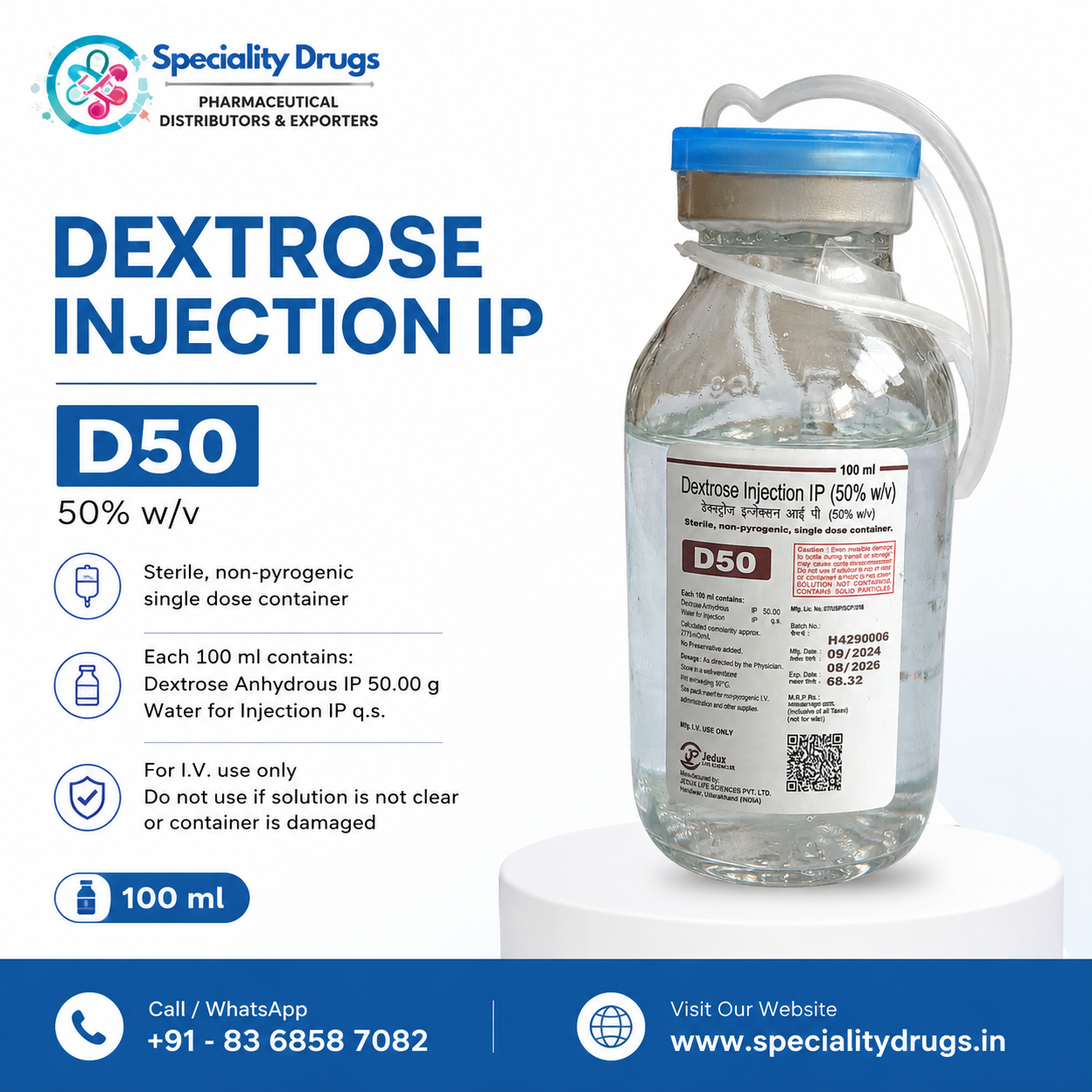
What is Dextrose Injection IP (50% w/v)?
Dextrose Injection IP (50% w/v), commonly referred to as D50, is a concentrated sterile solution containing dextrose, a form of glucose, intended for intravenous medical use. The product shown is a 100 mL bottle labeled “Dextrose Injection IP (50% w/v)” and “D50.” At a 50% concentration, the solution contains approximately 0.5 g of dextrose per mL.
Dextrose is a simple carbohydrate that the body can use as an energy source. Glucose is particularly important for tissues such as the brain, which rely heavily on glucose for normal function. When dextrose is administered intravenously in an appropriate clinical situation, it can increase the concentration of glucose in the bloodstream.
Dextrose Injection 50% is a hypertonic intravenous solution. Because it is highly concentrated, it can cause significant irritation or injury to veins and surrounding tissues if it is administered incorrectly. For this reason, it is a hospital or clinical-use medicine that should be handled and administered only by appropriately trained healthcare professionals.
Current prescribing information identifies 50% dextrose injection for the treatment of certain forms of insulin-induced hypoglycemia, including hypoglycemia associated with hyperinsulinemia or insulin shock. The exact clinical use depends on the patient’s condition, age, blood glucose level, metabolic status, and other treatments being received.
The manufacturer information visible on the supplied photograph is not sufficiently clear to verify the manufacturer’s full name, so the manufacturer should be confirmed from the original packaging or official product documentation rather than assumed.
Uses of Dextrose Injection 50%
Dextrose Injection 50% has a specific role in clinical settings. Its primary labeled use is related to restoring blood glucose in appropriate cases of insulin-induced hypoglycemia.
Depending on the clinical situation and applicable product labeling, concentrated dextrose may be used for:
- Treatment of certain cases of insulin-induced hypoglycemia
- Management of clinically significant low blood glucose when intravenous treatment is medically required
- Restoration of circulating glucose when a rapid intravenous carbohydrate source is clinically indicated
- Selected clinical situations where intravenous dextrose is required under professional supervision
The appropriate concentration and treatment approach depend on the patient’s clinical condition. Dextrose products of different concentrations are not interchangeable without professional assessment.
This medicine should only be administered under the supervision of a qualified healthcare professional.
Benefits of Dextrose Injection 50%
Dextrose Injection 50% provides concentrated glucose that can be used in appropriate medical situations requiring intravenous correction of low blood glucose.
Potential clinical benefits include:
- Provides a concentrated source of glucose
- Can help restore blood glucose during appropriate episodes of hypoglycemia
- Provides carbohydrate energy that can be utilized by the body’s cells
- Allows glucose to be delivered intravenously when oral administration is not appropriate
- Can form part of emergency or hospital-based management when clinically indicated
These benefits should not be interpreted as a guarantee of treatment success. The underlying cause of hypoglycemia must also be assessed and managed by healthcare professionals.
How Does Dextrose Injection 50% Work?
Dextrose is essentially glucose in a form suitable for pharmaceutical use. Once administered intravenously, it enters the bloodstream and increases the available glucose concentration.
Glucose is an important energy source for many tissues. The brain, in particular, depends substantially on glucose availability. When blood glucose becomes dangerously low, restoring glucose availability can help correct the metabolic problem.
The effect of D50 is related to its high concentration. Because 50% dextrose is strongly hypertonic, it requires careful clinical administration. Incorrect administration or an excessive rate can result in complications including significant hyperglycemia, hyperosmolarity, vein irritation, phlebitis, thrombosis, and tissue injury.
Dextrose Injection 50% Dosage and Administration
The Dextrose Injection 50% dosage must be determined by a healthcare professional. It is not appropriate to select a dose based only on the product strength or bottle volume.
Clinical decisions can depend on factors such as:
- Age
- Body weight
- Blood glucose concentration
- Cause and severity of hypoglycemia
- Kidney function
- Metabolic status
- Fluid and electrolyte status
- Other medicines or treatments being received
Current U.S. prescribing information specifies that Dextrose Injection 50% is for intravenous use only and should not be administered subcutaneously or intramuscularly. The product’s high osmolarity also creates a risk of venous irritation and thrombosis.
Patients and caregivers should not attempt to administer D50 themselves. Administration should be performed by trained healthcare professionals using appropriate clinical procedures.
Side Effects of Dextrose Injection 50%
Like all medicines, Dextrose Injection 50% may cause side effects, although not everyone experiences them.
Common or Recognized Adverse Effects
Reported adverse effects associated with concentrated intravenous dextrose include:
- Increased blood glucose levels
- Vein irritation or phlebitis
- Thrombosis
- Fluid or electrolyte disturbances
- Changes in sodium levels
- Injection-site complications
- Hypersensitivity or infusion reactions
The risk of adverse effects may increase when concentrated dextrose is administered incorrectly or too rapidly.
Serious Side Effects
Serious reactions require immediate medical attention. These may include:
- Severe hyperglycemia
- Hyperosmolar complications
- Significant electrolyte abnormalities
- Serious hypersensitivity reactions, including anaphylaxis
- Severe vein inflammation or thrombosis
- Tissue complications associated with extravasation
If a patient develops an unexpected or severe reaction during or after treatment, the healthcare team should be informed immediately.
Warnings and Precautions
Dextrose Injection 50% requires particular caution because it is a concentrated hypertonic solution.
Healthcare professionals should consider relevant medical conditions before administration. Current labeling identifies contraindications including intracranial or intraspinal hemorrhage, severe dehydration, alcohol withdrawal, and known hypersensitivity to dextrose.
Special attention may also be required in people with:
- Diabetes or impaired glucose tolerance
- Kidney impairment
- Fluid or electrolyte abnormalities
- Conditions affecting glucose regulation
- Increased risk of fluid overload
- Pediatric or elderly patients
Rapid or inappropriate administration may cause substantial increases in blood glucose and serum osmolality. Monitoring of glucose, electrolytes, fluid balance, and other relevant clinical parameters may therefore be necessary.
Pregnancy and breastfeeding should be discussed with a healthcare professional before treatment. The decision to use concentrated intravenous dextrose during pregnancy or breastfeeding should be based on the clinical circumstances.
Drug Interactions
Dextrose can affect blood glucose and fluid/electrolyte balance, so healthcare professionals should review a patient’s complete medication profile before treatment.
Tell the healthcare professional about:
- Prescription medicines
- Non-prescription medicines
- Diabetes medicines
- Vitamins
- Herbal products
- Mineral or electrolyte supplements
- Other intravenous treatments
The current prescribing information emphasizes monitoring blood glucose, fluid balance, serum electrolytes, and acid-base status where appropriate.
Storage Instructions
Storage requirements should follow the specific manufacturer’s package insert and label because they can vary between products.
General pharmaceutical handling principles include:
- Keep the container in its original packaging when appropriate.
- Protect the product from unsuitable environmental conditions.
- Inspect the solution before use.
- Do not use the product if the solution is discolored, contains unexpected particles, or the container is damaged.
- Do not use after the stated expiry date.
- Keep medicines away from children.
- Follow the manufacturer’s instructions regarding storage and disposal.
Because this is a sterile injectable product, compromised packaging or questionable product integrity requires professional assessment before use.
Frequently Asked Questions
1. What is Dextrose Injection 50% used for?
Dextrose Injection 50% is a concentrated intravenous glucose solution. Its current labeled indication includes treatment of insulin-induced hypoglycemia in appropriate patients. It is used in clinical settings under professional supervision.
2. What does D50 mean?
D50 refers to a 50% dextrose solution. At this concentration, the solution contains approximately 0.5 grams of dextrose per milliliter. It is substantially more concentrated than commonly used lower-strength dextrose solutions.
3. Is Dextrose Injection 50% safe?
It can be used safely when appropriately selected and administered by qualified healthcare professionals. However, because it is highly concentrated, it carries important risks including hyperglycemia, electrolyte abnormalities, phlebitis, thrombosis, and tissue injury.
4. Can D50 be administered at home?
D50 is not intended for self-administration. It is an intravenous medicine requiring appropriate clinical assessment, equipment, monitoring, and trained administration.
5. What are the common Dextrose Injection 50% side effects?
Recognized adverse effects include hyperglycemia, hypersensitivity reactions, phlebitis, thrombosis, electrolyte imbalance, hyponatremia, and injection-site or infection-related complications.
6. Can people with diabetes receive D50?
Diabetes does not automatically determine whether dextrose can or cannot be used. The clinical indication, blood glucose level, and overall medical condition must be assessed by a healthcare professional. Dextrose can significantly increase blood glucose.
7. Why is D50 considered a concentrated solution?
A 50% dextrose solution contains a high amount of glucose in a relatively small volume. Its high osmolarity can irritate veins and cause complications if improperly administered.
8. Can Dextrose Injection 50% be used for every type of low blood sugar?
No. The appropriate treatment depends on the cause, severity, patient’s age and condition, ability to take glucose orally, and other clinical factors. D50 should not be selected or administered without professional assessment.
9. What should be checked before using D50?
Healthcare professionals may assess blood glucose, the cause of hypoglycemia, fluid and electrolyte status, kidney function, relevant medical history, and concurrent medicines. Product integrity and appropriate administration access also need to be considered.
10. How should Dextrose Injection 50% be stored?
The product should be stored according to the manufacturer’s official labeling. The container should be protected from inappropriate environmental conditions and checked for damage, discoloration, particles, or expiry before clinical use.
Medical Disclaimer
This information about Dextrose Injection IP (50% w/v) is provided for general educational purposes and should not replace advice from a qualified healthcare professional. D50 is a concentrated injectable medicine and should only be selected, prepared, administered, and monitored by appropriately trained medical personnel.
Do not self-medicate or attempt to administer this injection without professional supervision. The appropriate clinical treatment varies according to the individual patient’s condition, laboratory findings, medical history, and other medicines being used. Always refer to the product’s approved prescribing information and the advice of a qualified healthcare professional.

Reviews
There are no reviews yet.