
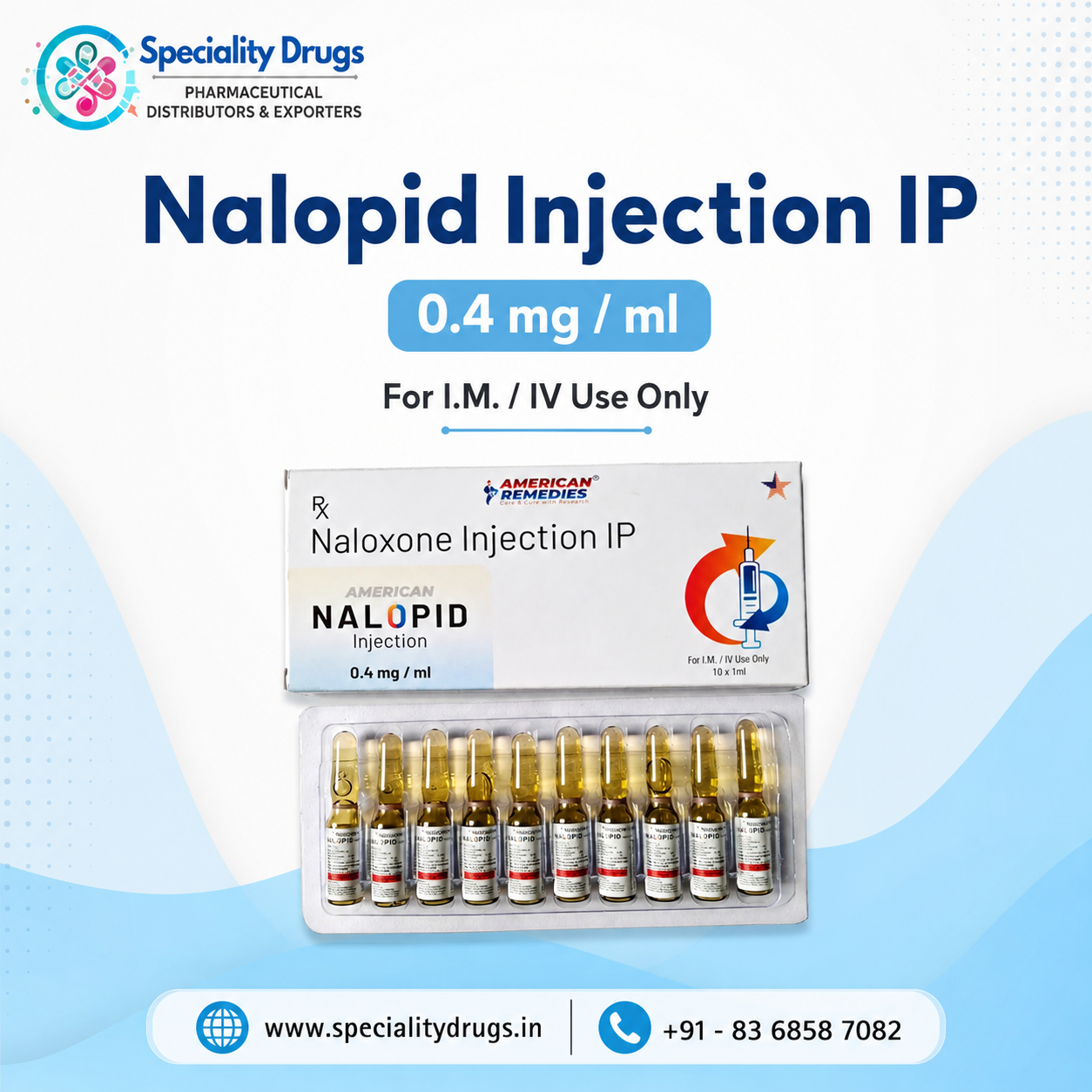
What is American Nalopid Injection?
American Nalopid Injection contains naloxone hydrochloride 0.4 mg/mL, a medicine belonging to the opioid antagonist class. Naloxone is used in medical emergencies to reverse the effects of opioids, particularly opioid-related respiratory and central nervous system depression. Official naloxone injection labeling describes the medicine as an opioid antagonist available in a 0.4 mg/mL injectable strength.
Opioids include medicines such as morphine, fentanyl, oxycodone and other opioid drugs. When opioids produce excessive effects, they can slow breathing and reduce consciousness. Naloxone works by competing with opioids at opioid receptors in the body. By blocking these receptors, it can rapidly reduce opioid effects and help restore adequate breathing.
American Nalopid Injection is intended for use by qualified healthcare professionals in appropriate medical situations. Because opioid effects can return after naloxone wears off, patients require medical observation after treatment. The appropriate treatment depends on the opioid involved, the patient’s condition and the clinical response.
Uses of American Nalopid Injection
American Nalopid Injection is primarily associated with the emergency reversal of opioid-induced effects.
Common medical uses include:
- Reversal of opioid-induced respiratory depression.
- Reversal of excessive opioid effects affecting consciousness or the central nervous system.
- Emergency management of suspected opioid overdose.
- Reversal of opioid effects following opioid administration in a healthcare setting.
- Supporting emergency treatment when significant opioid-related respiratory depression is suspected.
Naloxone does not treat the underlying reason why an opioid was taken, and it does not replace emergency medical evaluation. Additional medical care may be necessary because some opioids can remain active in the body longer than naloxone.
This medicine should only be administered under the supervision of a qualified healthcare professional.
Benefits of American Nalopid Injection
The main benefit of American Nalopid Injection is its ability to rapidly counteract opioid effects when clinically appropriate.
Potential benefits include:
- Helps reverse opioid-related respiratory depression.
- Helps restore the effects of opioid-related breathing suppression.
- Can be used as part of emergency management of suspected opioid overdose.
- Provides a specific opioid-receptor blocking effect.
- May help healthcare professionals stabilize a patient while further emergency care is arranged.
- Can be useful in clinical settings where opioid effects need to be reversed.
Naloxone should not be considered a permanent cure for opioid poisoning. Continued observation and additional treatment may be necessary depending on the opioid involved and the patient’s response.
How Does American Nalopid Injection Work?
Naloxone is an opioid receptor antagonist. Opioids produce their effects mainly by activating opioid receptors in the nervous system. Excessive opioid activity can suppress the brain’s normal drive to breathe.
Naloxone has a strong affinity for opioid receptors and competes with opioid molecules for these receptor sites. When naloxone occupies the receptors, it can reduce or reverse opioid-mediated effects, particularly respiratory depression.
The response can vary depending on the type and amount of opioid involved, the patient’s health and whether other substances have also been taken. Some opioids may have a longer duration of action than naloxone, which is one reason continued medical observation can be important.
How to Take American Nalopid Injection
American Nalopid Injection is an injectable prescription medicine and is not intended for self-administration.
- It should be administered by an appropriately trained healthcare professional.
- The healthcare professional determines the appropriate treatment according to the patient’s clinical condition.
- American Nalopid dosage is individualized and should follow the prescribing information and clinical judgment.
- Do not attempt to inject the medicine without professional training and medical supervision.
- Patients receiving naloxone may require continued observation and additional medical treatment.
Because naloxone is generally used in urgent clinical circumstances, its administration and monitoring should be handled by healthcare professionals.
American Nalopid Injection Side Effects
Like all medicines, American Nalopid Injection may cause side effects, although not everyone experiences them.
Common Side Effects
Possible effects can include:
- Nausea
- Vomiting
- Sweating
- Headache
- Dizziness
- Trembling
- Increased heart rate
- Restlessness
- Anxiety
- Changes in blood pressure
Some effects occur because naloxone rapidly reverses opioid activity. In a person who has physical dependence on opioids, sudden opioid reversal can produce an acute withdrawal reaction.
Serious Side Effects
Serious reactions can occur, particularly in patients with significant medical problems or following abrupt reversal of opioid effects. These may include:
- Severe changes in blood pressure or heart rhythm
- Breathing difficulties
- Pulmonary edema
- Seizures
- Significant cardiovascular complications
Patients receiving naloxone should receive appropriate medical monitoring. If side effects persist or become severe, contact your healthcare provider promptly.
Warnings and Precautions
American Nalopid Injection should be used carefully according to the patient’s medical condition.
Pregnancy: Naloxone may be used when clinically necessary, particularly when treatment of serious opioid-related respiratory depression is required. Pregnant patients should be managed by qualified healthcare professionals.
Breastfeeding: Inform the healthcare provider if the patient is breastfeeding. The clinical circumstances and benefits of treatment should be considered.
Heart disease: Rapid opioid reversal may produce cardiovascular stress in susceptible patients. Healthcare professionals should consider relevant cardiac history.
Liver disease: Tell the healthcare provider about liver problems because the patient’s overall clinical condition can affect treatment decisions.
Kidney disease: Existing kidney problems should be disclosed to the treating healthcare professional.
Opioid dependence: Sudden reversal can cause withdrawal symptoms in people who regularly use opioids.
Allergies: Do not use naloxone in patients with a known serious allergy to naloxone or any component of the formulation.
Alcohol and other substances: If alcohol, sedatives or other substances may have been involved, healthcare professionals should be informed because mixed intoxication can complicate emergency management.
Drug Interactions
Naloxone primarily interacts clinically with opioid medicines because it blocks their effects. It may therefore reverse both unwanted and intended opioid effects, including pain relief.
Tell the healthcare professional about all medicines or substances being used, including:
- Prescription medicines
- Over-the-counter medicines
- Opioid pain medicines
- Medicines used for opioid dependence
- Sedatives or medicines affecting the central nervous system
- Vitamins
- Herbal products and supplements
Because American Nalopid is generally used in urgent medical circumstances, healthcare professionals should be given as much information as possible about any medicines or substances that may have been taken.
Storage Instructions
Storage requirements should always follow the product packaging and manufacturer instructions. Official labeling for 0.4 mg/mL naloxone injection commonly recommends controlled room-temperature storage and protection from light.
General precautions include:
- Store according to the temperature stated on the product label.
- Protect the medicine from direct light.
- Keep the ampoules in their original packaging where appropriate.
- Do not use the product if the container is damaged.
- Do not use expired medicine.
- Keep medicines away from children and unauthorized users.
- Healthcare facilities should follow applicable pharmaceutical storage procedures.
American Nalopid Injection Price and Manufacturer
The American Nalopid Injection price can vary depending on the supplier, location, pack size, taxes and applicable distribution charges. For the most accurate current price, patients or healthcare institutions should obtain information from a licensed pharmacy or authorized pharmaceutical supplier.
The package shown identifies American Remedies as the manufacturer and identifies the product as Nalopid Injection containing naloxone hydrochloride 0.4 mg/mL. Product availability and packaging may vary by market.
Disclaimer
This American Nalopid Injection medicine information is provided for educational purposes only and should not be considered medical advice. Naloxone injection is a prescription medicine intended for use by trained healthcare professionals in appropriate clinical situations. Do not self-medicate or attempt to administer an injectable medicine without professional supervision.
Always follow the prescription, product labeling and advice of a qualified healthcare professional. Individual responses to naloxone may vary, and emergency treatment decisions depend on the patient’s condition and the opioid involved.
Frequently Asked Questions
1. What is American Nalopid Injection used for?
American Nalopid Injection contains naloxone hydrochloride and is used by healthcare professionals to reverse opioid-related effects, particularly respiratory depression. It may be used in suspected opioid overdose or in clinical situations where opioid effects need to be reversed. It is an emergency medicine and does not replace comprehensive medical evaluation and monitoring.
2. How does American Nalopid Injection work?
Naloxone blocks opioid receptors in the nervous system. Opioids can suppress breathing when their effects become excessive. By competing with opioids at these receptors, naloxone can reduce their effects and help reverse opioid-induced respiratory depression. The patient’s response depends on the opioid involved and their overall medical condition.
3. Is American Nalopid Injection safe?
Naloxone is an established medicine for reversing opioid effects when used appropriately. However, it can cause side effects, including symptoms associated with sudden opioid withdrawal. Serious reactions can also occur in some patients. It should therefore be administered and monitored by qualified healthcare professionals according to the clinical situation.
4. Can American Nalopid Injection be used long term?
Naloxone injection is generally used for acute reversal of opioid effects rather than routine long-term treatment. The appropriate duration of care depends on the underlying situation and the opioid involved. Patients treated for suspected opioid overdose may require continued observation because opioid effects can outlast the effect of naloxone.
5. What happens if a dose is missed?
American Nalopid Injection is not normally taken according to a routine home dosing schedule. It is administered in a clinical or emergency setting when opioid effects require reversal. If additional treatment is required, healthcare professionals determine the appropriate management based on the patient’s response and medical condition.
6. Can American Nalopid Injection be stopped suddenly?
Naloxone is used for acute reversal rather than as a medicine that patients normally taper or stop themselves. The healthcare team determines when treatment and monitoring can end. Because opioid effects may return after naloxone’s effect decreases, medical observation may be necessary following treatment.
7. Can American Nalopid Injection be taken with food?
Food does not have the same relevance for an injectable medicine as it does for oral medicines. American Nalopid Injection is administered by an appropriately trained healthcare professional. Patients should not attempt to alter the administration method or use the medicine themselves based on food intake.
8. What are the common American Nalopid Injection side effects?
Possible side effects include nausea, vomiting, sweating, headache, dizziness, restlessness, anxiety, changes in blood pressure and increased heart rate. Naloxone can also trigger opioid withdrawal in people who are physically dependent on opioids. Any concerning or severe reaction should receive prompt medical attention.
9. Who should avoid American Nalopid Injection?
A person with a known serious allergy to naloxone or one of its ingredients should not receive it unless a qualified healthcare professional determines otherwise. In emergencies, healthcare professionals consider the overall risks and benefits. Patients should provide information about allergies, opioid use and relevant medical conditions.
10. How should American Nalopid Injection be stored?
Storage should follow the manufacturer’s instructions printed on the packaging. Naloxone 0.4 mg/mL injection products are commonly stored at controlled room temperature and protected from light. The product should remain in suitable packaging until required and should not be used after expiry or if the container is damaged.
Reviews
There are no reviews yet.