
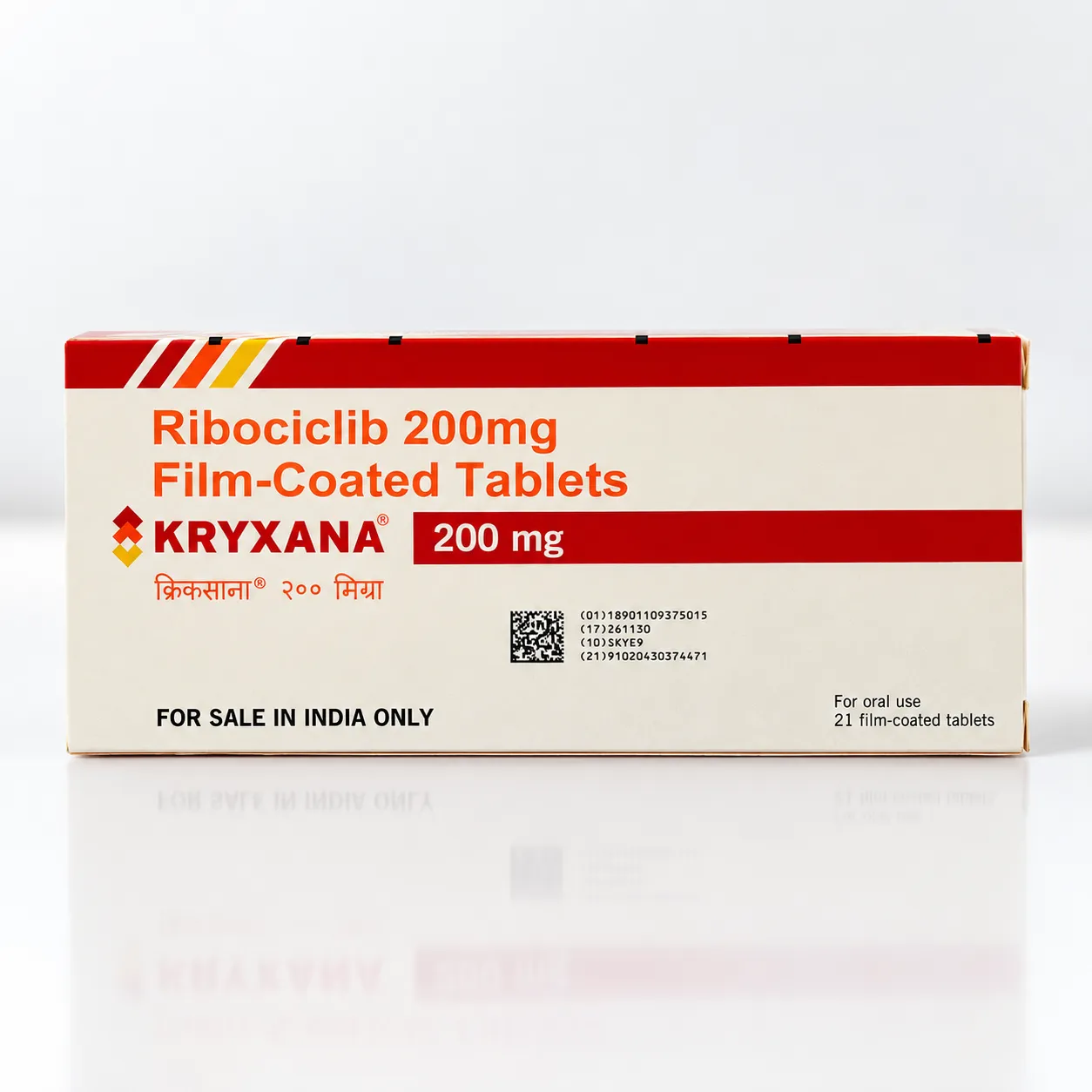
Kryxana 200 mg: Ribociclib Tablets – Product Description
Kryxana 200 mg contains ribociclib, an anticancer medicine belonging to the class of drugs known as cyclin-dependent kinase 4 and 6 (CDK4/6) inhibitors. It is supplied as a film-coated tablet for oral use and is used as part of specific treatment plans for certain types of breast cancer. The medicine is generally prescribed in combination with appropriate endocrine therapy, depending on the patient’s cancer type, stage, treatment history, and clinical circumstances.
Because ribociclib is a prescription oncology medicine, its use requires supervision by an oncologist or other qualified healthcare professional. The exact treatment plan depends on individual medical factors and the applicable prescribing information.
What is Kryxana 200 mg?
Kryxana 200 mg is a film-coated tablet containing 200 mg of ribociclib. Ribociclib works by inhibiting CDK4 and CDK6, proteins involved in regulating the cell cycle. By interfering with these proteins, ribociclib can slow the progression of cancer cells through the cell cycle and reduce their ability to multiply.
Ribociclib is used in the management of selected hormone receptor-positive (HR-positive), HER2-negative breast cancers. Depending on the clinical setting, ribociclib may be used with endocrine therapies such as an aromatase inhibitor or fulvestrant. Its use can differ according to whether the disease is early-stage or advanced/metastatic and according to the patient’s individual treatment circumstances.
Kryxana should not be considered a general-purpose cancer medicine. Its suitability is determined by a qualified cancer specialist after reviewing the patient’s diagnosis and other clinical information.
Kryxana 200 mg Uses
Ribociclib is used in specific breast-cancer treatment settings. Depending on the approved indication and treatment plan, it may be used for:
- Certain HR-positive, HER2-negative early breast cancers where additional systemic treatment is appropriate.
- Certain HR-positive, HER2-negative advanced or metastatic breast cancers.
- Treatment in combination with endocrine therapy when clinically indicated.
- Reducing the risk of recurrence in certain eligible patients with HR-positive, HER2-negative early breast cancer.
The precise indication can vary according to country, regulatory approval and the patient’s clinical situation. Novartis reports that ribociclib has approvals in both early and advanced/metastatic HR-positive, HER2-negative breast-cancer settings.
This medicine should only be used under the supervision of a qualified healthcare professional.
Kryxana 200 mg Benefits
The potential benefits of ribociclib relate to its ability to interfere with cancer-cell growth and, in appropriate patients, improve outcomes when used as part of an established treatment strategy.
Potential clinical benefits may include:
- Helps inhibit the activity of CDK4 and CDK6.
- Helps slow the progression of cancer cells through the cell cycle.
- May contribute to controlling HR-positive, HER2-negative breast cancer when used in an appropriate treatment combination.
- In selected early breast-cancer patients, ribociclib has been shown to reduce the risk of disease recurrence when combined with endocrine therapy.
- May help support long-term disease management in appropriate patients with advanced or metastatic disease.
These benefits should not be interpreted as a guarantee of cure or treatment response. Individual outcomes can vary considerably.
How Does Kryxana 200 mg Work?
The active ingredient, ribociclib, selectively inhibits cyclin-dependent kinase 4 and 6.
CDK4 and CDK6 normally work with cyclin D proteins to help regulate progression through the cell cycle. This process includes phosphorylation of the retinoblastoma protein, which allows cells to progress from the G1 phase toward DNA synthesis and cell division.
Ribociclib inhibits CDK4/6 activity. This reduces phosphorylation of the retinoblastoma protein and can cause cell-cycle arrest in the G1 phase. As a result, the proliferation of susceptible cancer cells may be reduced.
In breast cancer, ribociclib is commonly incorporated into treatment alongside endocrine therapy when clinically appropriate. The combination targets cancer growth through complementary biological pathways.
Kryxana 200 mg Side Effects
Like all medicines, Kryxana 200 mg may cause side effects, although not everyone experiences them.
Common or Clinically Important Side Effects
Possible adverse effects associated with ribociclib include:
- Neutropenia or reduced neutrophil counts
- Reduced white blood-cell counts
- Anemia
- Fatigue
- Nausea
- Diarrhea
- Vomiting
- Constipation
- Headache
- Hair loss
- Increased liver enzymes
- Changes in blood tests
Blood-count and liver-test abnormalities are particularly important because ribociclib can affect bone marrow and liver function.
Serious Side Effects
Ribociclib has important safety warnings involving several organ systems. These include:
- QT-interval prolongation, which can affect the heart’s electrical rhythm.
- Serious liver problems or significant liver-test abnormalities.
- Interstitial lung disease or pneumonitis, which can affect lung function.
- Severe or potentially serious skin reactions.
- Severe reductions in blood-cell counts, which may increase the risk of infection.
Symptoms such as an irregular heartbeat, fainting, significant breathing difficulty, yellowing of the skin or eyes, or other severe unexpected reactions require prompt medical evaluation.
If side effects persist or become severe, contact your healthcare provider promptly.
Warnings and Precautions
Kryxana requires careful medical monitoring. Before treatment, patients should tell their healthcare professional about their complete medical history and all medicines they use.
Particular attention may be required in people with:
- Existing heart-rhythm problems.
- Conditions associated with QT prolongation.
- Liver disease or abnormal liver-function tests.
- Previous significant blood-count abnormalities.
- Lung or respiratory problems.
- A history of serious medicine allergies.
- Other medical conditions requiring regular medication.
Ribociclib can affect cardiac electrical activity, liver function and blood-cell production, so healthcare professionals may use laboratory testing and other monitoring during treatment.
Pregnancy and breastfeeding should also be discussed with the treating healthcare professional before therapy begins. Cancer treatment decisions during pregnancy require specialist assessment because anticancer medicines may pose risks to a developing fetus.
Drug Interactions
Ribociclib can interact with other medicines because it is metabolized through pathways involving CYP3A and can also affect the concentrations of certain other medicines.
Patients should provide their doctor or pharmacist with a complete list of:
- Prescription medicines
- Over-the-counter medicines
- Vitamins
- Herbal products
- Dietary supplements
Particular care may be necessary with medicines that affect CYP3A activity or medicines that can prolong the QT interval. The healthcare professional should review potential interactions before treatment and whenever another medicine is started or stopped.
Storage of Kryxana 200 mg
Kryxana should be stored according to the storage conditions provided on its approved packaging and patient information leaflet.
General medicine-storage principles include:
- Keep the medicine in its original packaging.
- Protect it from unsuitable environmental conditions.
- Keep it away from children.
- Do not use tablets after their expiry date.
- Do not use damaged or visibly compromised packaging.
For exact storage requirements, patients should follow the product packaging and advice provided by their pharmacist or healthcare professional.
Kryxana 200 mg Manufacturer
Kryxana is a ribociclib product associated with Novartis. Novartis publishes professional information describing Kryxana as ribociclib tablets containing 200 mg ribociclib per tablet.
Product registration, packaging and availability can differ between countries. The information printed on the specific product pack should therefore be checked before publication or distribution of commercial product information.
Frequently Asked Questions
1. What is Kryxana 200 mg used for?
Kryxana 200 mg contains ribociclib and is used in selected treatment settings for HR-positive, HER2-negative breast cancer. Depending on the indication, it may be used for certain early, advanced or metastatic breast cancers, generally as part of a treatment plan involving endocrine therapy.
2. What is the active ingredient in Kryxana?
The active ingredient is ribociclib. It belongs to the CDK4/6 inhibitor class of anticancer medicines and works by interfering with proteins involved in cancer-cell cycle progression.
3. Is Kryxana a chemotherapy medicine?
Ribociclib is an anticancer medicine, but it is specifically classified as a CDK4/6 inhibitor, rather than a traditional cytotoxic chemotherapy drug. It works by selectively inhibiting CDK4 and CDK6.
4. How does ribociclib work?
Ribociclib inhibits CDK4 and CDK6, which are involved in controlling cell-cycle progression. Inhibition of these proteins can cause susceptible cancer cells to remain in the G1 phase and can reduce their proliferation.
5. What are Kryxana 200 mg side effects?
Possible side effects include changes in blood-cell counts, fatigue, nausea, gastrointestinal symptoms and liver-enzyme abnormalities. Important serious risks include QT prolongation, liver toxicity, lung inflammation and severe blood-count abnormalities.
6. Can Kryxana be used for every type of breast cancer?
No. Ribociclib is intended for specific breast-cancer populations, including selected HR-positive, HER2-negative cancers. Whether it is appropriate depends on factors such as hormone-receptor status, HER2 status, disease stage and previous treatment.
7. Does Kryxana cure breast cancer?
Kryxana should not be described as a guaranteed cure. It is one component of treatment for selected patients, and the expected benefit depends on the type and stage of cancer and the overall treatment plan.
8. Why are blood tests important during ribociclib treatment?
Ribociclib can affect blood-cell counts and liver function. Healthcare professionals may therefore monitor laboratory results during treatment to identify abnormalities and manage them appropriately.
9. Can ribociclib interact with other medicines?
Yes. Ribociclib can interact with various medicines, including some medicines affecting CYP3A metabolism and medicines associated with QT prolongation. Patients should provide their healthcare professional with a complete medication and supplement list.
10. Should Kryxana be used without a doctor’s prescription?
No. Ribociclib is a prescription oncology medicine requiring specialist assessment and monitoring. Patients should use it only as directed by their treating healthcare professional.
Medical Disclaimer
This information about Kryxana 200 mg (ribociclib) is provided for general educational purposes and should not replace professional medical advice, diagnosis or treatment. Ribociclib is a prescription anticancer medicine and should be used only under appropriate medical supervision. Do not self-medicate or make changes to cancer treatment without consulting the treating oncologist. Individual responses, risks and treatment requirements vary. Always refer to the current approved prescribing information and advice from a qualified healthcare professional.



Reviews
There are no reviews yet.