
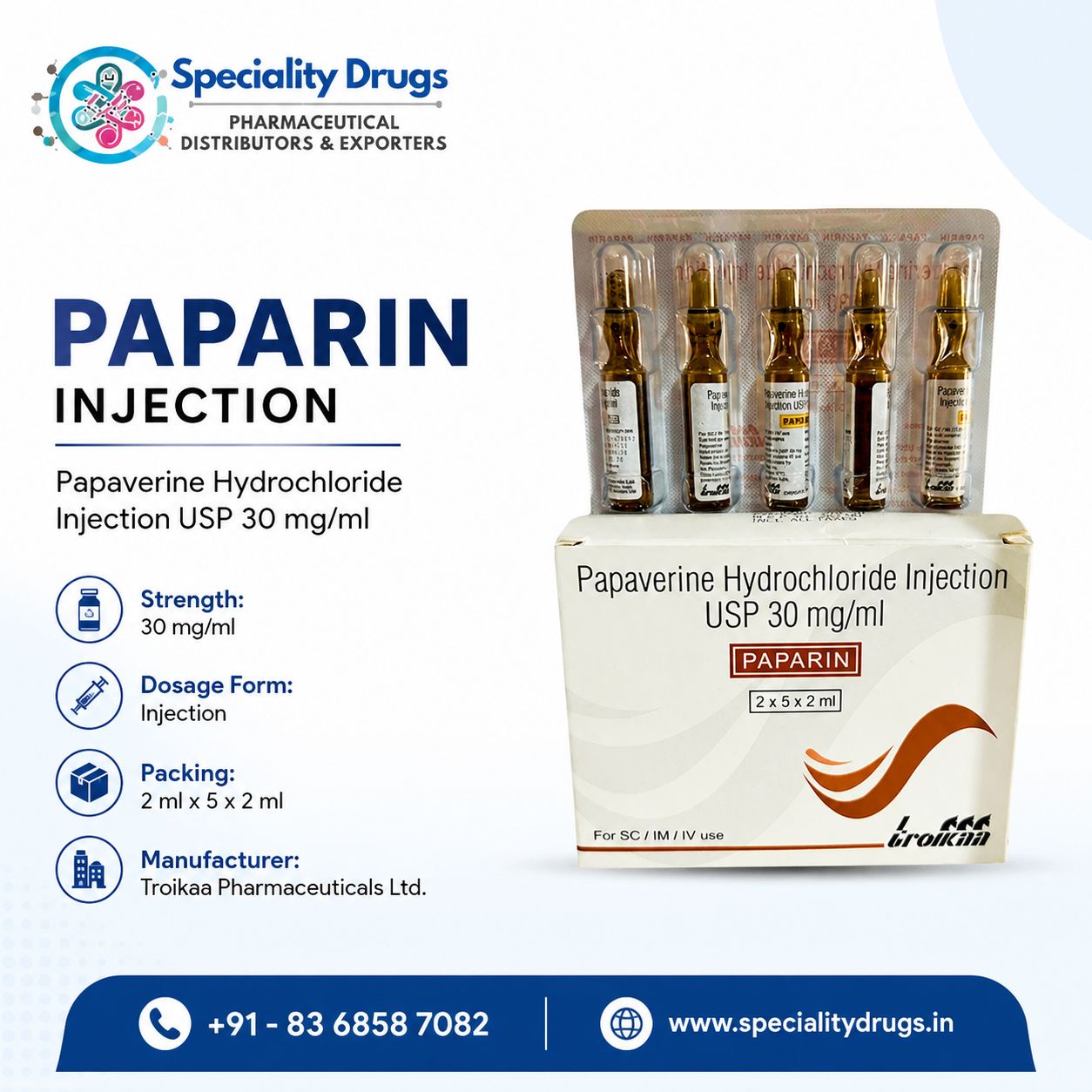
Paparin Injection 30 mg/mL – Product Description
Paparin Injection is a prescription injectable medicine containing Papaverine Hydrochloride 30 mg/mL. It belongs to a group of medicines known for their smooth-muscle relaxing and vasodilating properties. Papaverine acts directly on smooth muscles and can help reduce abnormal muscle contraction or spasm in selected clinical conditions.
The product shown is Paparin Injection 30 mg/mL, supplied in 2 mL ampoules. The pack displayed contains 5 × 2 mL ampoules, with the product manufactured by Troikaa Pharmaceuticals Ltd. Because Paparin is an injectable prescription medicine, its administration and clinical use should be determined by a qualified healthcare professional.
What is Paparin Injection?
Paparin Injection contains Papaverine Hydrochloride, a pharmacologically active compound that produces relaxation of smooth muscle. Smooth muscles are found in many parts of the body, including blood vessels and portions of the gastrointestinal, urinary, and biliary systems.
When these muscles contract excessively, they may contribute to spasms or other symptoms. Papaverine works by reducing smooth-muscle contraction, allowing the affected muscle to relax. It can also produce relaxation of blood-vessel smooth muscle, resulting in vasodilation.
Doctors may prescribe papaverine injection in selected situations involving vascular spasm or visceral smooth-muscle spasm. Depending on the clinical circumstances, it may be used in the management of certain spasmodic conditions affecting the gastrointestinal, biliary, or urinary tract, as well as selected vascular conditions.
Paparin Injection should not be considered a general-purpose painkiller. Its usefulness depends on the underlying cause of the patient’s symptoms and the clinical judgment of the treating healthcare professional.
Paparin Injection Uses
Paparin Injection may be used by healthcare professionals for selected conditions where relaxation of smooth muscle or blood vessels is clinically appropriate.
Commonly described medical uses include:
- Management of certain smooth-muscle spasms
- Management of selected vascular spasms
- Relief of certain visceral spasmodic conditions
- Management of selected gastrointestinal spasms or colic
- Management of certain biliary spasmodic conditions
- Management of selected urinary-tract spasms
- Use in specific vascular conditions when considered appropriate by a specialist
The exact use depends on the patient’s medical condition, symptoms, medical history, and treatment plan. Papaverine should therefore be used only when specifically recommended by a qualified healthcare professional.
Paparin Injection Benefits
The potential benefits of Paparin Injection are related to the smooth-muscle relaxing action of papaverine hydrochloride.
Potential clinical benefits include:
- Helps relax contracted smooth muscle
- May reduce smooth-muscle spasm in appropriate conditions
- Produces relaxation of certain blood vessels
- May support improved blood flow when vascular spasm is involved
- Can be useful in selected gastrointestinal, biliary, or urinary spasmodic conditions
- May provide symptom control when muscle spasm is an underlying contributor
Paparin Injection does not cure every condition associated with pain or spasm. Its benefits depend on the underlying disease and the patient’s individual response to treatment.
How Does Paparin Injection Work?
Paparin Injection works through papaverine hydrochloride, which directly relaxes smooth muscle. Unlike medicines that primarily act through the nervous system, papaverine has a direct effect on the smooth-muscle tissues themselves.
Papaverine inhibits certain enzymes involved in intracellular signaling, including phosphodiesterase activity. This can increase cyclic nucleotide levels within smooth-muscle cells and contribute to muscle relaxation.
When smooth muscle in a blood vessel relaxes, the vessel can widen, a process known as vasodilation. When smooth muscle in certain internal organs relaxes, spasmodic contractions may decrease.
This mechanism explains why papaverine may have applications involving both vascular spasm and visceral smooth-muscle spasm. The clinical effect, however, varies according to the tissue involved and the patient’s underlying condition.
How to Use Paparin Injection
Paparin is an injectable medicine and should be administered only by a trained healthcare professional according to the prescribed treatment plan.
Patients should not attempt to inject Paparin themselves. The healthcare professional determines the appropriate route and administration based on the medical condition and clinical circumstances.
Important considerations include:
- Use only when prescribed or recommended by a qualified healthcare professional.
- Do not change the prescribed treatment without medical advice.
- Inform the healthcare professional about all existing medical conditions.
- Tell the doctor or nurse about all prescription and non-prescription medicines being used.
- The ampoule should be inspected before administration.
- Do not use an expired or visibly damaged ampoule.
- The medicine should be handled and administered according to professional and product-specific instructions.
Because Paparin is an injection, the usual oral-medicine instructions concerning swallowing tablets or taking medicine with food do not apply.
Paparin Injection Side Effects
Like all medicines, Paparin Injection may cause side effects, although not everyone experiences them. Side effects can vary depending on the patient’s health, the clinical situation, and the route of administration.
Common or Reported Side Effects
Possible adverse effects associated with papaverine include:
- Nausea
- Abdominal discomfort
- Headache
- Dizziness
- Flushing
- Sweating
- Increased heart rate
- Constipation or diarrhea
- Skin rash
- Weakness or malaise
- Drowsiness or sedation
These effects may not occur in every patient. If an unwanted reaction is persistent, troublesome, or worsening, medical advice should be obtained.
Serious Side Effects
Although uncommon, serious reactions require prompt medical evaluation. These may include:
- Abnormal heart rhythm
- Significant cardiovascular effects
- Severe allergic reactions
- Symptoms suggesting liver injury
- Jaundice or yellowing of the skin or eyes
- Other unexpected or severe reactions
Patients receiving injectable treatment should immediately inform the healthcare professional if they experience a serious or unusual reaction.
If side effects persist or become severe, contact your healthcare provider promptly.
Warnings and Precautions
Paparin Injection should be used carefully in patients with certain medical conditions.
Heart Problems
Papaverine can affect cardiovascular function. Particular caution is required in patients with heart rhythm or conduction abnormalities. Healthcare professionals should assess cardiac history before treatment when appropriate.
Liver Problems
Papaverine has been associated with liver-related adverse reactions. Patients with existing liver disease should inform their doctor before treatment.
Glaucoma
Papaverine should be used cautiously in people with glaucoma or other relevant eye conditions.
Pregnancy
Pregnant patients should inform their doctor before receiving Paparin Injection. The healthcare professional should determine whether the expected benefit justifies potential risks.
Breastfeeding
It is not always clear whether papaverine passes into human breast milk in clinically significant amounts. Breastfeeding patients should discuss treatment with their healthcare professional.
Elderly Patients
Older adults may be more sensitive to medicines that affect cardiovascular function or cause dizziness. Their overall health and other medicines should be considered before treatment.
Driving and Operating Machinery
Papaverine may cause dizziness or drowsiness in some individuals. Patients experiencing these effects should avoid activities requiring full alertness until they feel safe and have followed medical advice.
Allergies
Patients should tell their healthcare professional about any known allergy to papaverine or other medicines.
Drug Interactions
Paparin Injection may interact with other medicines or influence their effects. Patients should provide their healthcare professional with a complete list of medicines and supplements they use.
Tell your doctor about:
- Prescription medicines
- Over-the-counter medicines
- Vitamins and nutritional supplements
- Herbal products
- Other injections or hospital medicines
Particular attention may be necessary when a patient has cardiovascular disease or is receiving medicines that affect blood pressure or heart rhythm.
Healthcare professionals should also follow compatibility and administration instructions for injectable products. Papaverine should not be mixed with incompatible solutions unless compatibility has been specifically established.
Paparin Injection Storage
Paparin Injection should be stored according to the manufacturer’s instructions printed on the packaging.
General precautions include:
- Keep the medicine in its original packaging.
- Protect it from excessive light.
- Store under the temperature conditions specified on the product label.
- Keep the ampoules away from children.
- Do not use the product after its expiry date.
- Do not use an ampoule if it is damaged, cracked, leaking, or otherwise unsuitable.
- Healthcare facilities should follow appropriate storage and handling procedures for injectable medicines.
Paparin Injection Price
The Paparin Injection price may vary depending on the pack size, pharmacy, location, applicable taxes, and current manufacturer pricing. The image shows a pack containing 2 mL × 5 ampoules.
Because medicine prices can change over time, customers should confirm the current price with a licensed pharmacy or authorized pharmaceutical supplier. The price displayed online may also differ from the price available at a local pharmacy.
Paparin Injection Manufacturer
The product shown in the provided packaging is Paparin Injection, manufactured by Troikaa Pharmaceuticals Ltd. The pack identifies the manufacturer as Troikaa and specifies Papaverine Hydrochloride Injection USP 30 mg/mL.
When purchasing or sourcing Paparin Injection, buyers should check the product name, active ingredient, strength, manufacturer, batch information, expiry date, and packaging condition before accepting the product.
Frequently Asked Questions
1. What is Paparin Injection used for?
Paparin Injection contains papaverine hydrochloride and is used in selected medical conditions involving smooth-muscle or vascular spasm. It may be considered for certain gastrointestinal, biliary, urinary, or vascular conditions when a healthcare professional determines that papaverine is appropriate.
2. What is the active ingredient in Paparin Injection?
The active ingredient is Papaverine Hydrochloride. The product shown contains 30 mg/mL of papaverine hydrochloride and is supplied as an injectable preparation.
3. How does Paparin Injection work?
Papaverine directly relaxes smooth muscle. It can relax smooth muscle in blood vessels and certain internal organs. This action may help reduce spasms and, in selected circumstances, promote widening of blood vessels.
4. Is Paparin Injection safe?
Paparin can be appropriate when prescribed for a suitable medical condition, but it can also cause adverse effects and may not be suitable for everyone. A qualified healthcare professional should evaluate the patient’s medical history and other medicines before administration.
5. What are Paparin Injection side effects?
Possible side effects include nausea, headache, dizziness, flushing, sweating, abdominal discomfort, changes in bowel habits, increased heart rate, rash, and drowsiness. Serious cardiovascular, allergic, or liver-related reactions require prompt medical attention.
6. Can Paparin Injection be used during pregnancy?
Pregnant patients should not use Paparin without medical advice. The healthcare professional should evaluate the potential benefits and risks based on the patient’s individual circumstances.
7. Can Paparin Injection be used while breastfeeding?
Breastfeeding patients should inform their doctor before receiving Paparin Injection. The healthcare professional can determine whether treatment is appropriate based on the available clinical information and the patient’s circumstances.
8. Can Paparin Injection be self-administered?
No. Paparin is an injectable prescription medicine and should be administered by an appropriately trained healthcare professional. Patients should not attempt to administer the injection themselves.
9. What is the Paparin Injection price?
The price can vary according to pack size, supplier, location, taxes, and current market pricing. The displayed product is a 2 mL ampoule presentation supplied in a five-ampoule pack. Customers should confirm the current price with an authorized pharmacy or supplier.
10. Who manufactures Paparin Injection?
The product shown in the provided packaging is manufactured by Troikaa Pharmaceuticals Ltd. The packaging identifies the medicine as Paparin and specifies Papaverine Hydrochloride Injection USP 30 mg/mL.
Disclaimer
This product description is provided for educational and informational purposes only. It is not intended to replace professional medical advice, diagnosis, or treatment. Paparin Injection is a prescription injectable medicine and should be used only under the supervision of a qualified healthcare professional.
Do not self-medicate or attempt to administer the injection without appropriate professional supervision. Always follow the prescription, product information, and advice provided by your doctor or other qualified healthcare provider. Individual responses to medicines can vary, and treatment decisions should be based on the patient’s specific medical condition.


Reviews
There are no reviews yet.