
Prescription medicine: Medrocan-40 Injection should be administered only by a qualified healthcare professional and used strictly according to a doctor’s prescription.
1. What is Medrocan-40 Injection?
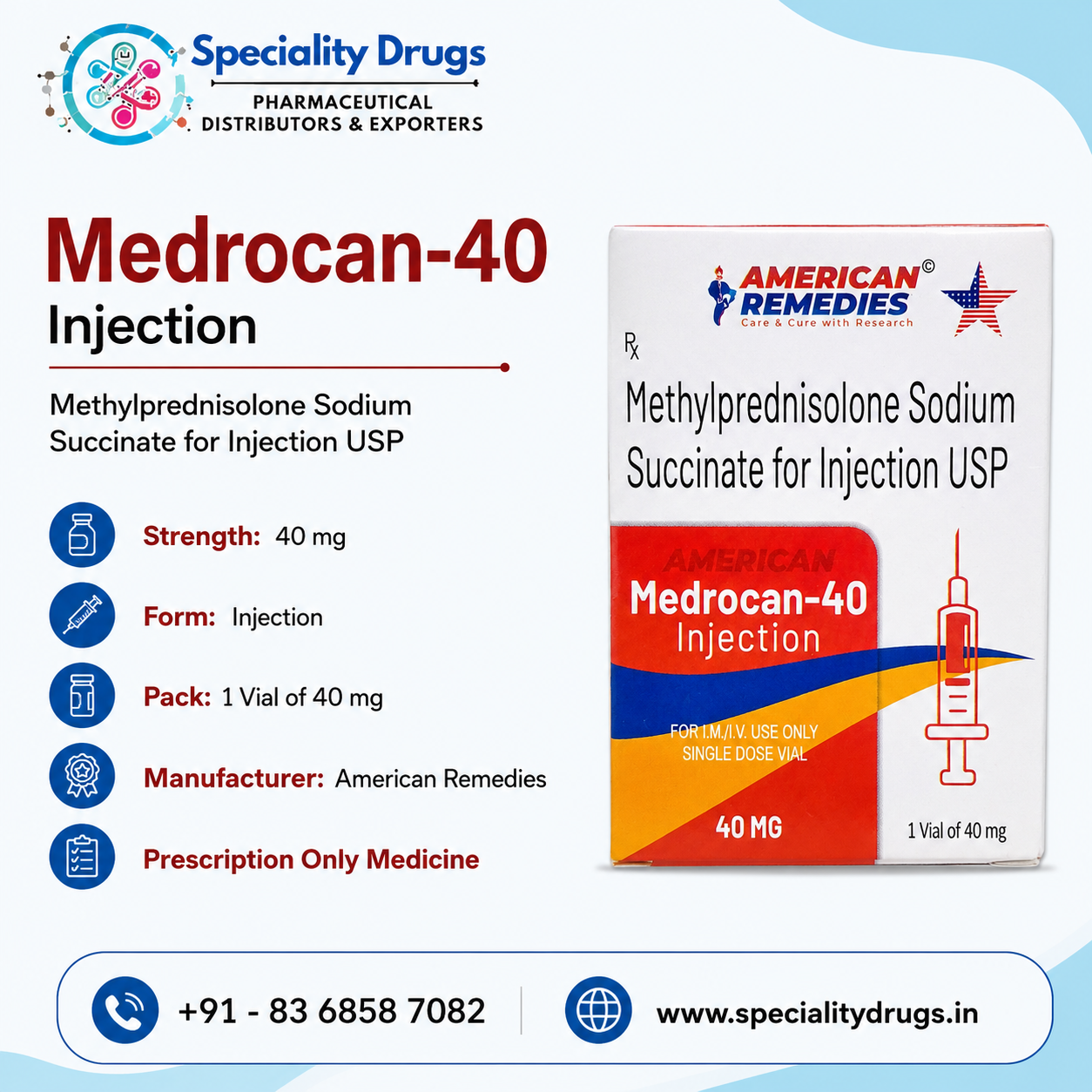
Medrocan-40 Injection contains methylprednisolone sodium succinate, a corticosteroid medicine belonging to the glucocorticoid class. The product shown is a 40 mg single-dose vial manufactured by American Remedies.
Methylprednisolone is a synthetic corticosteroid that helps control excessive inflammation and immune-system activity. It works by influencing the production and activity of inflammatory substances in the body. Because corticosteroids can affect several body systems, this medicine is generally reserved for conditions where its anti-inflammatory or immunosuppressive effects are medically appropriate.
Methylprednisolone sodium succinate injection may be used in a variety of inflammatory, allergic, rheumatic, immune-related, endocrine, respiratory, neurological, and other serious medical conditions. Approved uses can vary according to the formulation, country, and clinical circumstances.
Doctors may select an injectable corticosteroid when treatment needs to be given by injection or when a patient cannot appropriately receive corticosteroids by mouth. The injection may be administered intravenously or intramuscularly depending on the clinical situation and medical instructions.
Medrocan-40 Injection is a prescription medicine and should never be self-administered. A healthcare professional should determine whether it is appropriate for an individual patient.
2. Uses of Medrocan-40 Injection
Medrocan-40 Injection may be prescribed as part of the management of conditions involving significant inflammation or abnormal immune activity. Depending on the clinical situation, methylprednisolone sodium succinate may be used for:
- Management of severe inflammatory conditions
- Treatment of selected rheumatic and autoimmune disorders
- Management of certain allergic or hypersensitivity reactions
- Treatment of selected respiratory inflammatory conditions
- Supportive treatment for certain neurological inflammatory disorders
- Management of selected endocrine conditions involving corticosteroid deficiency
- Treatment of certain skin and connective-tissue inflammatory disorders
- Management of selected kidney-related inflammatory disorders
- Supportive treatment in certain serious medical conditions where corticosteroid therapy is indicated
The exact indication depends on the patient’s diagnosis, medical history, severity of illness, and response to treatment. Methylprednisolone sodium succinate has a broad range of clinical indications, including selected rheumatic, endocrine, respiratory, neurological, renal, and immune-related conditions.
This medicine should only be administered under the supervision of a qualified healthcare professional.
3. Benefits of Medrocan-40 Injection
When appropriately prescribed, Medrocan-40 Injection may provide corticosteroid effects that help control excessive inflammation and immune activity.
Potential clinical benefits include:
- Helps reduce inflammation
- May help control swelling and inflammatory symptoms
- Helps suppress excessive immune-system activity when medically necessary
- Can be useful when injectable corticosteroid therapy is clinically appropriate
- May support symptom control during acute inflammatory episodes
- Can form part of treatment for selected immune-mediated diseases
These benefits should not be interpreted as a guarantee of cure. The response to methylprednisolone differs between patients and depends on the underlying condition and treatment plan.
4. How Does Medrocan-40 Injection Work?
Methylprednisolone is a glucocorticoid. After entering the body, it interacts with glucocorticoid receptors inside cells. This changes the activity of certain genes involved in inflammation and immune responses.
In simple terms, methylprednisolone helps turn down excessive inflammatory and immune activity. It can reduce the production of several substances involved in inflammation, which may help decrease symptoms such as swelling and inflammatory discomfort.
Because the medicine also suppresses parts of the immune response, it can increase susceptibility to infections and may sometimes mask signs of infection. This is one reason corticosteroid treatment requires appropriate medical supervision.
5. How to Take Medrocan-40 Injection
Medrocan-40 is an injectable prescription medicine, so it should not be injected by patients without appropriate medical training and supervision.
General guidance includes:
- Use exactly as prescribed by the doctor.
- The injection should be prepared and administered by an appropriately trained healthcare professional.
- The route of administration should be selected by the treating clinician.
- Do not change the prescribed treatment schedule yourself.
- Do not repeat injections without medical advice.
- Tell the healthcare professional about other medicines and existing medical conditions before treatment.
The appropriate dose and duration depend heavily on the disease being treated and the patient’s clinical response. Official prescribing information emphasizes that methylprednisolone dosing is individualized according to the condition and severity.
Medrocan-40 Dosage
The 40 mg strength shown on the package does not mean that 40 mg is the appropriate dose for every patient. Corticosteroid dosing can vary substantially according to the medical indication, age, severity of illness, route of administration, and response to treatment. A doctor must determine the appropriate regimen.
6. Medrocan-40 Injection Side Effects
Like all medicines, Medrocan-40 Injection may cause side effects, although not everyone experiences them.
Common Side Effects
Possible corticosteroid-related effects can include:
- Increased blood glucose
- Increased blood pressure
- Fluid retention
- Indigestion or stomach discomfort
- Headache
- Difficulty sleeping
- Mood changes
- Increased appetite
- Increased susceptibility to infections
The likelihood of side effects can depend on the dose, duration of treatment, and individual patient factors.
Serious Side Effects
Seek prompt medical attention if significant problems occur, such as:
- Signs of a serious allergic reaction
- Severe or unusual infection symptoms
- Significant changes in vision
- Severe mental or behavioral changes
- Serious gastrointestinal symptoms
- Marked swelling or breathing difficulties
- Severe weakness or other concerning symptoms
Corticosteroids can suppress immune responses and may make infections harder to recognize.
If side effects persist or become severe, contact your healthcare provider promptly.
7. Warnings and Precautions
Before receiving Medrocan-40 Injection, tell your doctor if you have:
- A known allergy to methylprednisolone or any component of the formulation
- A current or previous serious infection
- Liver disease
- Kidney problems
- Heart disease or high blood pressure
- Diabetes or problems controlling blood glucose
- A history of stomach ulcers or significant gastrointestinal problems
- Osteoporosis or other bone-health concerns
- A history of significant psychiatric or mood disorders
- Any condition requiring medicines that suppress the immune system
Methylprednisolone can increase susceptibility to infections and may mask some signs of infection. Systemic fungal infection is a contraindication in official product information.
Pregnancy and Breastfeeding
Pregnant or breastfeeding patients should discuss treatment with their doctor before receiving methylprednisolone. The healthcare professional can weigh the potential benefits and risks based on the individual’s condition.
Children and Elderly Patients
Children may require special consideration because corticosteroids can affect growth and other body processes. Elderly patients may also be more vulnerable to complications associated with corticosteroid treatment, particularly during prolonged therapy.
Alcohol and Driving
Patients should discuss alcohol use with their healthcare professional because individual risks depend on the medical condition and other medicines being taken. If treatment causes dizziness, vision changes, mood changes, or other symptoms that affect alertness, avoid driving or operating machinery and seek medical advice.
8. Drug Interactions
Medrocan-40 may interact with other medicines. Before treatment, inform your doctor about:
- Prescription medicines
- Over-the-counter medicines
- Vitamins and minerals
- Herbal products and supplements
- Other corticosteroids
- Medicines that affect the immune system
- Certain medicines for diabetes, blood pressure, seizures, or infections
Corticosteroids may also affect blood glucose control and immune responses. Vaccination decisions should be discussed with a healthcare professional, particularly when immunosuppressive corticosteroid doses are being used.
9. Storage Instructions
Storage requirements can depend on the specific formulation and packaging. General precautions include:
- Store according to the manufacturer’s instructions.
- Protect the product from unsuitable temperatures, excessive heat, and direct sunlight.
- Keep the vial in its original packaging until required.
- Keep out of reach of children.
- Do not use the product after its expiry date.
- Do not use a vial if its packaging is damaged or the product appears unsuitable.
Healthcare professionals should follow the manufacturer’s preparation and handling instructions before administration.
10. Medrocan-40 Price and Manufacturer
The package shown identifies American Remedies as the manufacturer and lists Medrocan-40 Injection as a 40 mg methylprednisolone sodium succinate injection.
The Medrocan-40 price may vary depending on location, pharmacy, taxes, packaging, and availability. Because this is a prescription injectable medicine, patients should rely on qualified healthcare professionals and licensed pharmaceutical channels rather than attempting to self-purchase or self-administer the injection.
11. Frequently Asked Questions
1. What is Medrocan-40 Injection used for?
Medrocan-40 contains methylprednisolone sodium succinate, a corticosteroid used to control inflammation and abnormal immune activity in selected medical conditions. Its uses can include certain rheumatic, allergic, respiratory, neurological, endocrine, renal, and immune-related disorders. The exact indication should always be determined by a doctor based on the patient’s diagnosis.
2. How does Medrocan-40 work?
Medrocan-40 works through glucocorticoid receptors and modifies inflammatory and immune responses. In simple terms, it reduces excessive activity involved in inflammation. This can help control inflammatory symptoms in conditions where corticosteroid treatment is appropriate.
3. Is Medrocan-40 safe?
Methylprednisolone can be safe when appropriately prescribed and administered under medical supervision. However, corticosteroids can cause significant side effects, particularly with higher doses or prolonged treatment. A doctor should assess the benefits and risks before treatment.
4. Can Medrocan-40 be taken long term?
Long-term corticosteroid treatment requires careful medical monitoring because it can increase the risk of complications such as infections, blood-glucose changes, blood-pressure problems, osteoporosis, and other effects. The duration of treatment should be determined by the treating healthcare professional.
5. What happens if I miss a dose?
Because Medrocan-40 is an injectable prescription medicine, dosing is normally managed by a healthcare professional. If a scheduled treatment is missed, contact the treating healthcare provider for appropriate advice rather than arranging an additional injection yourself.
6. Can Medrocan-40 be stopped suddenly?
Patients receiving prolonged systemic corticosteroid treatment should not stop therapy suddenly unless instructed by a healthcare professional. The body’s natural corticosteroid production can be affected by prolonged treatment, so discontinuation may sometimes need medical planning.
7. Can Medrocan-40 be taken with food?
Medrocan-40 is an injection rather than an oral tablet, so food does not determine how the injection is administered. Patients should follow the healthcare professional’s instructions and inform them about all medicines and supplements being used.
8. What are the common Medrocan-40 side effects?
Possible corticosteroid-related effects include increased blood glucose, increased blood pressure, fluid retention, stomach discomfort, sleep problems, increased appetite, mood changes, and greater susceptibility to infections. Not every patient develops these effects, and risk varies with treatment duration and dose.
9. Who should avoid Medrocan-40?
People with known hypersensitivity to methylprednisolone or its components and patients with systemic fungal infections may need to avoid this medicine. The product also has specific administration restrictions. A doctor should review allergies, infections, existing illnesses, and current medicines before treatment.
10. How should Medrocan-40 be stored?
Medrocan-40 should be stored according to the manufacturer’s instructions and protected from unsuitable temperature, direct sunlight, and damage. Keep it away from children and do not use it after expiry. Healthcare professionals should follow the product-specific instructions for preparation and handling.
Disclaimer
This Medrocan-40 medicine information is provided for educational purposes only and is not a substitute for professional medical advice, diagnosis, or treatment. Do not self-medicate or self-administer this injection. Always follow the prescription and instructions provided by a qualified healthcare professional. Individual responses to methylprednisolone can vary, and the appropriate treatment depends on the patient’s medical condition, history, and other medicines.

Reviews
There are no reviews yet.