
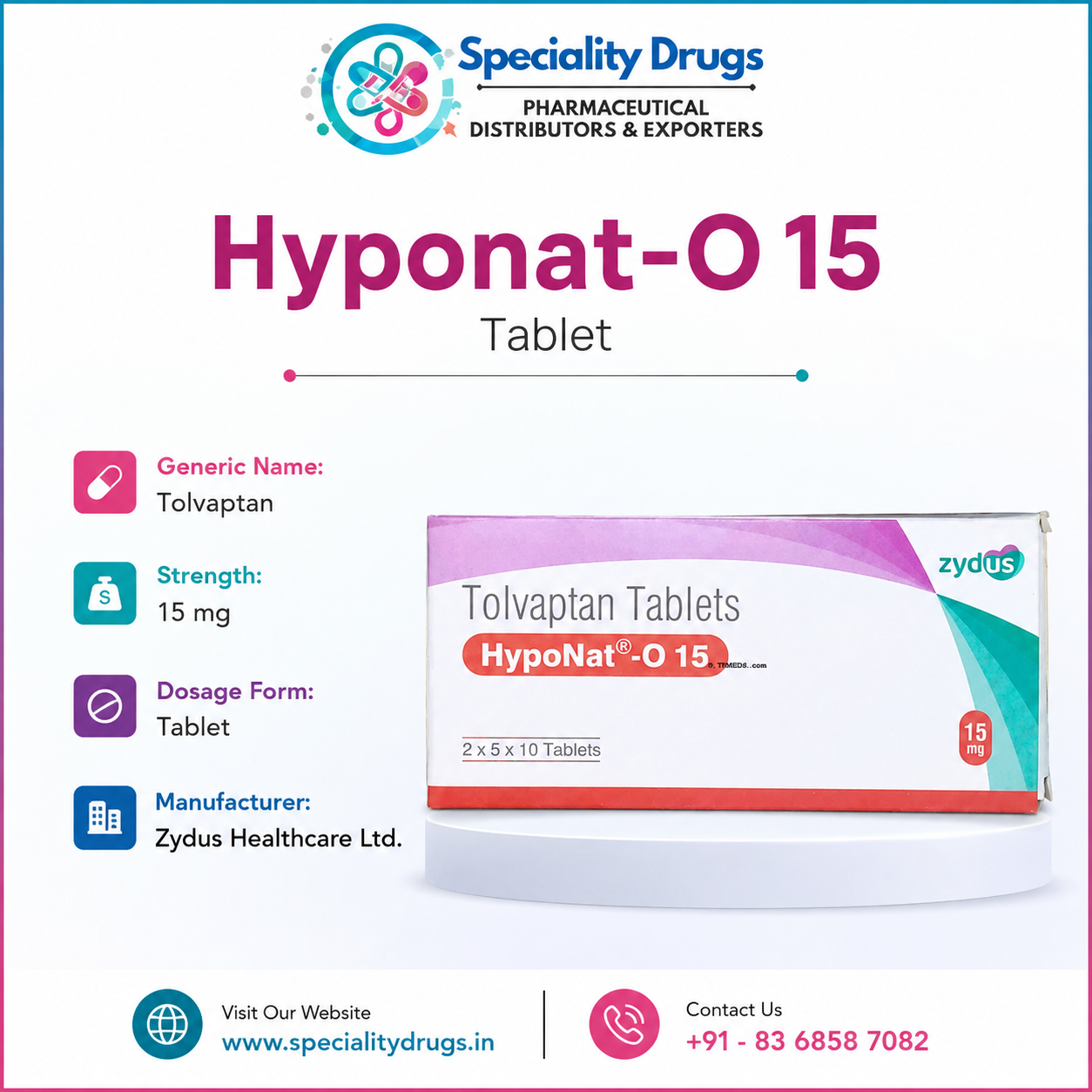
What is Hyponat-O 15?
Hyponat-O 15 is a prescription medicine containing tolvaptan 15 mg as its active ingredient. The product shown is manufactured by Zydus and is supplied as tablets. Tolvaptan belongs to a group of medicines known as vasopressin V2-receptor antagonists.
Tolvaptan is used in selected medical situations involving hyponatremia, a condition in which the concentration of sodium in the blood is abnormally low. Hyponatremia can occur for different reasons, including certain medical conditions that cause the body to retain excessive amounts of water.
Vasopressin, also called antidiuretic hormone (ADH), helps the kidneys regulate how much water is retained by the body. Tolvaptan blocks the action of vasopressin at V2 receptors in the kidneys. This promotes the removal of free water while having a comparatively smaller effect on sodium and other electrolytes. As a result, blood sodium concentration may increase in appropriately selected patients.
Because changes in blood sodium can sometimes occur rapidly, tolvaptan treatment requires appropriate medical assessment and monitoring. It should not be started, stopped, or changed without the direction of a qualified healthcare professional.
Uses of Hyponat-O 15
Hyponat-O 15 may be prescribed by a healthcare professional for selected patients with certain forms of clinically significant hyponatremia. The underlying cause of low sodium must be evaluated before treatment.
Depending on the patient’s condition, tolvaptan may be considered in situations such as:
- Certain forms of euvolemic hyponatremia.
- Certain forms of hypervolemic hyponatremia.
- Hyponatremia associated with conditions such as heart failure or the syndrome of inappropriate antidiuretic hormone secretion (SIADH), when clinically appropriate.
- Other specifically evaluated situations in which excessive water retention contributes to low blood sodium.
The medicine is not appropriate for every type of hyponatremia. For example, treatment decisions can differ substantially depending on whether low sodium is related to dehydration, medications, kidney problems, hormonal disorders, heart disease, liver disease, or other causes.
This medicine should only be used under the supervision of a qualified healthcare professional.
Potential Benefits of Hyponat-O 15
When appropriately prescribed, tolvaptan may help increase blood sodium concentration in patients with selected types of hyponatremia.
Potential clinical benefits may include:
- Helping correct low blood sodium in appropriately selected patients.
- Supporting management of excessive water retention associated with certain conditions.
- Helping address symptoms associated with clinically significant hyponatremia when the underlying condition is suitable for treatment.
- Providing a pharmacological option when a doctor determines that vasopressin-related water retention is contributing to the sodium imbalance.
The expected response varies from person to person. Correction of sodium levels needs to be carefully controlled because correcting hyponatremia too rapidly can itself cause serious neurological complications.
How Does Tolvaptan Work?
Tolvaptan works primarily by blocking vasopressin V2 receptors in the kidneys.
Normally, vasopressin signals the kidneys to retain water. When tolvaptan blocks this signal, the kidneys release more water into the urine. This process is sometimes described as aquaresis, meaning removal of water without directly removing large amounts of sodium.
By reducing excess free-water retention, tolvaptan can increase the concentration of sodium in the blood in appropriately selected patients.
The mechanism is different from that of conventional diuretics, which generally increase the urinary loss of both water and electrolytes. The specific effect of tolvaptan is one reason why careful monitoring is important during treatment.
Hyponat-O 15 Dosage and Medical Supervision
The appropriate dose and treatment duration depend on the patient’s medical condition, laboratory results, age, kidney and liver status, other medicines, and response to treatment.
Tolvaptan should not be self-dosed. A healthcare professional determines whether the medicine is appropriate and monitors blood sodium and other relevant clinical parameters.
Patients should follow the prescription and medical instructions provided to them. They should not independently increase, decrease, restart, or discontinue treatment.
Particular caution is required because an excessively rapid increase in blood sodium can result in serious neurological complications. For this reason, initiation and adjustment of treatment may require close clinical monitoring.
Hyponat-O 15 Side Effects
Like all medicines, Hyponat-O 15 may cause side effects, although not everyone experiences them.
Commonly Reported Effects
Possible adverse effects associated with tolvaptan can include:
- Increased thirst.
- Dry mouth.
- Increased urination.
- Weakness or fatigue.
- Dizziness.
- Headache.
- Constipation.
- Nausea.
The likelihood and severity of adverse effects can vary according to the patient’s health and the reason for treatment.
Serious Side Effects
Tolvaptan can cause clinically important complications, particularly if blood sodium increases too quickly.
Serious warning signs can include significant neurological changes such as confusion, unusual weakness, difficulty speaking, seizures, or other sudden changes in neurological function. These symptoms require urgent medical attention.
Tolvaptan can also be associated with liver injury, particularly with longer-term exposure in certain treatment settings. Symptoms that may suggest liver problems include unusual tiredness, loss of appetite, abdominal discomfort, dark urine, or yellowing of the skin or eyes.
If concerning or severe symptoms occur, medical attention should be sought promptly.
Warnings and Precautions
Tolvaptan requires careful medical assessment before and during treatment.
Liver Health
Patients with liver disease should tell their healthcare professional before treatment. Tolvaptan has been associated with serious liver injury in certain treatment settings, and clinicians consider liver-related risks when deciding whether it is appropriate.
Kidney Function
Kidney function can affect the management of fluid and electrolyte balance. Patients with kidney problems should provide their complete medical history to their healthcare professional.
Blood Sodium
One of the most important safety considerations is avoiding an excessively rapid correction of low sodium. Medical monitoring is therefore important, particularly when treatment is initiated or adjusted.
Pregnancy and Breastfeeding
Anyone who is pregnant, planning pregnancy, or breastfeeding should discuss tolvaptan with a qualified healthcare professional before treatment. The clinician can assess the potential benefits and risks for the individual situation.
Older Adults
Older patients may have additional medical conditions or take multiple medicines that can influence fluid and electrolyte balance. Their treatment therefore requires individualized medical assessment.
Driving and Alertness
Dizziness, weakness, or other symptoms may occur in some patients. Anyone experiencing such effects should discuss appropriate precautions with their healthcare professional.
Drug Interactions
Tolvaptan can interact with other medicines. Some drugs can alter the amount of tolvaptan present in the body, while others can influence fluid balance or blood sodium.
Patients should tell their healthcare professional about:
- Prescription medicines.
- Non-prescription medicines.
- Diuretics and medicines affecting fluid balance.
- Herbal products.
- Vitamins and nutritional supplements.
Certain medicines that affect liver enzymes can significantly alter tolvaptan exposure. Therefore, a complete medication history is important before treatment.
Patients should not add or stop another medicine without professional advice when they are receiving prescription treatment.
Storage Information
Keep Hyponat-O 15 in its original packaging and store it according to the storage instructions printed on the product packaging or supplied by the pharmacist.
General medicine-storage principles include:
- Keep the tablets away from excessive heat and moisture.
- Protect the medicine from unsuitable environmental conditions.
- Keep medicines out of the reach of children.
- Check the expiry date before use.
- Do not use tablets if the packaging is damaged or the medicine appears abnormal.
For product-specific storage requirements, follow the manufacturer’s labeling or ask a pharmacist.
Frequently Asked Questions
1. What is Hyponat-O 15 used for?
Hyponat-O 15 contains tolvaptan, a vasopressin V2-receptor antagonist. It may be prescribed for selected forms of clinically significant hyponatremia. The underlying cause of low sodium must be evaluated by a healthcare professional before treatment.
2. How does Hyponat-O 15 work?
Tolvaptan blocks vasopressin V2 receptors in the kidneys. This reduces the kidney’s retention of free water and promotes water excretion. In appropriately selected patients, this can help increase blood sodium concentration.
3. Is Hyponat-O 15 safe?
Tolvaptan can be appropriate when prescribed and monitored by a qualified healthcare professional. However, it has important safety considerations, including excessively rapid sodium correction and potential liver injury in certain treatment settings.
4. Can Hyponat-O 15 be used for every type of low sodium?
No. Hyponatremia has many possible causes, and tolvaptan is not appropriate for every case. A healthcare professional must determine the cause of low sodium and whether this medicine is suitable.
5. What are the common Hyponat-O 15 side effects?
Possible effects include thirst, dry mouth, increased urination, dizziness, headache, nausea, constipation, weakness, or fatigue. The individual’s risk depends on their medical condition and other factors.
6. Why is sodium monitoring important with tolvaptan?
Tolvaptan can increase blood sodium. If sodium rises too rapidly, serious neurological complications may occur. Therefore, appropriate clinical and laboratory monitoring is an important part of safe treatment.
7. Can tolvaptan affect the liver?
Yes. Tolvaptan has been associated with liver injury, particularly in certain long-term treatment settings. Patients should report symptoms such as unusual fatigue, loss of appetite, dark urine, abdominal discomfort, or yellowing of the skin or eyes.
8. Should people with kidney problems tell their doctor?
Yes. Kidney function is an important part of managing fluid and electrolyte balance. Anyone with kidney disease or reduced kidney function should provide this information to their healthcare professional before treatment.
9. Can Hyponat-O 15 interact with other medicines?
Yes. Tolvaptan can interact with medicines that affect its metabolism or fluid and electrolyte balance. Patients should provide a complete list of prescription medicines, over-the-counter products, supplements, and herbal preparations.
10. Who should decide whether Hyponat-O 15 is appropriate?
A qualified healthcare professional should make this decision after reviewing the patient’s diagnosis, sodium level, fluid status, medical history, other medicines, and relevant laboratory results. Self-medication is not appropriate.
Important Disclaimer
This information is provided for educational purposes only and is not a substitute for professional medical advice, diagnosis, or treatment. Hyponat-O 15 (tolvaptan) is a prescription medicine with important safety considerations. Do not self-medicate or change treatment based solely on information found online.
A qualified healthcare professional should determine whether tolvaptan is appropriate for an individual patient and should provide the necessary monitoring and treatment instructions. Individual responses to medicines can vary, and product labeling or local prescribing requirements may differ.
Always follow the prescription, product information, and advice provided by your doctor or pharmacist.

Reviews
There are no reviews yet.