
1. What is Betadine First Aid Solution?
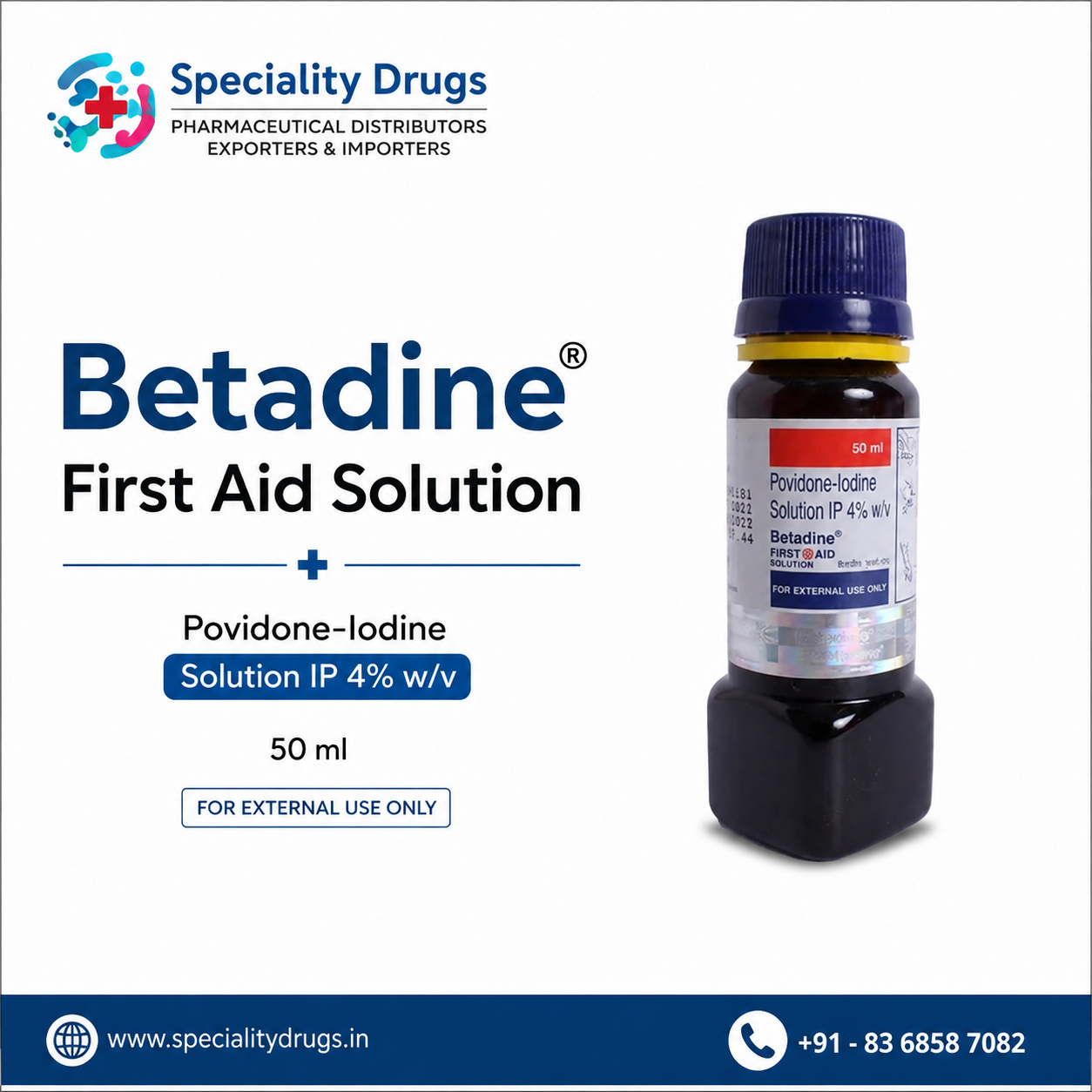
Betadine First Aid Solution is a topical antiseptic containing povidone-iodine 4% w/v as its active ingredient. It is intended for external application to the skin and is commonly associated with first-aid care for minor skin injuries. Product information available in India identifies the 50 ml presentation as a povidone-iodine 4% w/v topical solution marketed under the Betadine brand.
Povidone-iodine belongs to the group of antiseptic agents. It works by releasing iodine, which has broad antimicrobial activity against many types of microorganisms. In simple terms, it helps reduce microorganisms on the surface of the skin, which is why povidone-iodine preparations are widely used in antiseptic and skin-care settings.
Betadine First Aid Solution is generally associated with the cleansing and antiseptic care of minor cuts, scrapes, abrasions, and small burns. Antiseptic products are used to reduce the risk of infection in appropriate minor injuries; they are not substitutes for professional medical treatment when an injury is deep, extensive, contaminated, or otherwise serious.
The exact manufacturer, batch information, expiry date, storage requirements, and other details should always be checked on the original packaging because these details can vary between markets and presentations.
Important: Betadine First Aid Solution is for external use. Medical advice should be obtained when an injury is serious, persistent, worsening, or associated with significant symptoms.
2. Betadine First Aid Solution Uses
The main Betadine First Aid Solution uses relate to topical antiseptic care.
Commonly recognized uses of povidone-iodine first-aid preparations include:
- Supporting antiseptic care for minor cuts.
- Supporting care of minor scrapes and abrasions.
- Helping reduce the risk of infection in appropriate minor skin injuries.
- Supporting first-aid management of small, minor burns.
- Reducing microorganisms present on the surface of the skin.
Povidone-iodine should not be regarded as a treatment for every type of wound or skin infection. Deep wounds, puncture wounds, animal bites, serious burns, or wounds that show signs of worsening infection require assessment by a qualified healthcare professional.
This medicine should only be used according to the product label or advice from a qualified healthcare professional.
3. Benefits of Betadine First Aid Solution
The potential Betadine First Aid Solution benefits are primarily related to its antiseptic properties.
- Contains povidone-iodine, an established topical antiseptic.
- Helps reduce microorganisms on the skin.
- Can support appropriate first-aid care for minor skin injuries.
- May help reduce the risk of infection associated with suitable minor cuts, scrapes, and burns.
- Available as a topical liquid formulation for external skin use.
- Can be incorporated into an appropriate wound-care routine when recommended by a healthcare professional.
These benefits should not be interpreted as a guarantee that an injury will heal without complications. Proper wound assessment remains important, particularly when the injury is extensive or symptoms become worse.
4. How Does Betadine First Aid Solution Work?
The active ingredient in Betadine First Aid Solution is povidone-iodine. Povidone acts as a carrier for iodine. When the preparation comes into contact with the skin, iodine becomes available and exerts antimicrobial activity.
Iodine can interfere with important components of microorganisms, helping to inactivate them. This broad antimicrobial action is the reason povidone-iodine has been used as a topical antiseptic.
Because the product acts locally on the skin, it is different from medicines intended to work throughout the body. Its purpose is primarily to reduce microorganisms at the area where it is applied.
5. How to Use Betadine First Aid Solution Safely
Because this is a medicinal topical antiseptic, users should follow the specific instructions printed on the product packaging or provided by a healthcare professional.
Important general safety points include:
- It is intended for external use.
- Avoid contact with the eyes.
- Do not use it on large areas of the body unless specifically advised by a healthcare professional.
- Deep or puncture wounds should receive professional medical assessment.
- Serious burns and animal bites should be evaluated by a healthcare professional.
- Do not continue using a topical antiseptic when the condition is worsening or persistent without seeking medical advice.
- Accidental swallowing requires prompt professional medical assistance.
Official povidone-iodine labeling similarly emphasizes external use and recommends medical assessment for deep wounds, animal bites, serious burns, persistent conditions, and worsening symptoms.
6. Betadine First Aid Solution Side Effects
Like all medicines, Betadine First Aid Solution may cause side effects, although not everyone experiences them.
Common Side Effects
Some people may experience local skin reactions such as:
- Mild irritation.
- Redness.
- Burning or stinging sensation.
- Skin dryness or discomfort.
- Sensitivity at the application site.
If irritation becomes persistent or increasingly uncomfortable, medical advice should be sought.
Serious Side Effects
Serious allergic or skin reactions are uncommon but can require medical attention. Seek prompt medical assistance if significant swelling, severe irritation, breathing difficulty, or other signs of a serious allergic reaction occur.
Stop using the product and consult a healthcare professional if the wound becomes more painful, swollen, increasingly red, develops signs of infection, or does not improve as expected. Product labeling advises medical assessment when irritation or redness persists or when the underlying condition worsens.
7. Warnings and Precautions
Several precautions are important when considering povidone-iodine products.
Allergy or Sensitivity
People with a known sensitivity to povidone-iodine or ingredients in the particular formulation should seek professional advice before use.
Eyes
The product should not be placed in the eyes. Accidental eye exposure should be addressed promptly according to medical guidance.
Pregnancy and Breastfeeding
Pregnant or breastfeeding individuals should discuss the use of povidone-iodine preparations with a healthcare professional, particularly when repeated or extensive application is being considered.
Thyroid Conditions
Because povidone-iodine contains iodine, people with thyroid disorders or other conditions in which iodine exposure is medically relevant should ask a healthcare professional before using it, especially for repeated or extensive applications.
Kidney Disease
People with significant kidney problems should discuss repeated or extensive topical iodine exposure with a healthcare professional.
Children
Medicines and antiseptics should be kept out of children’s reach. Use in children should follow the product labeling and appropriate medical advice.
Serious Injuries
Deep wounds, puncture injuries, animal bites, and serious burns should not be managed solely with a household antiseptic. Professional medical evaluation may be necessary.
8. Drug Interactions
Although Betadine First Aid Solution is applied topically, interactions and precautions can still be relevant, particularly with extensive, prolonged, or repeated use.
A healthcare professional should be informed about:
- Prescription medicines.
- Over-the-counter medicines.
- Vitamins and nutritional supplements.
- Herbal products.
- Other topical antiseptics or skin preparations.
Avoid combining multiple topical products on the same area unless a healthcare professional recommends doing so. This can help reduce the possibility of irritation or unwanted interactions between products.
9. Storage Instructions
Storage requirements should be checked against the instructions printed on the specific product packaging.
General precautions include:
- Keep the bottle tightly closed when not in use.
- Protect the product from inappropriate heat and direct sunlight.
- Store it according to the temperature instructions on the label.
- Keep it away from children.
- Do not use the product after its expiry date.
- Do not use a product if its packaging or seal appears damaged.
The exact storage conditions can vary between formulations and manufacturers, so the original package should be treated as the primary reference.
10. Betadine First Aid Solution Price and Product Information
The Betadine First Aid Solution price can vary according to pack size, seller, location, taxes, and market conditions. The 50 ml presentation shown in the supplied product image is identified as a povidone-iodine 4% w/v first-aid solution. Current Indian pharmacy listings also identify a 50 ml Betadine First Aid Solution with povidone-iodine 4% w/v and Win-Medicare as the marketer.
For an accurate price, expiry date, batch number, and manufacturer or marketer information, always refer to the original product packaging and a legitimate pharmacy source.
11. Disclaimer
This information about Betadine First Aid Solution is provided for general educational purposes only. It is not a substitute for professional medical advice, diagnosis, or treatment.
Do not self-medicate or use a medicine outside its labeled purpose. A qualified healthcare professional should be consulted when there is uncertainty about whether an antiseptic is appropriate, particularly for children, pregnancy, allergies, thyroid problems, significant medical conditions, or serious injuries.
Individual responses to medicines and topical products can vary. Always follow the product label and healthcare professional’s advice.
12. Frequently Asked Questions
1. What is Betadine First Aid Solution used for?
Betadine First Aid Solution contains povidone-iodine and is a topical antiseptic associated with first-aid care for suitable minor cuts, scrapes, abrasions, and small burns. It helps reduce microorganisms on the skin. It should not replace professional treatment for deep wounds, serious burns, animal bites, or injuries that are worsening or not improving.
2. How does Betadine First Aid Solution work?
It contains povidone-iodine, which releases iodine when present on the skin. Iodine has broad antimicrobial activity and can inactivate many microorganisms. This helps reduce microorganisms at the treated skin surface. The product is intended for topical antiseptic purposes rather than as a systemic medicine.
3. Is Betadine First Aid Solution safe?
When used appropriately according to its labeling and professional advice, povidone-iodine is an established topical antiseptic. However, it can cause irritation or sensitivity in some people. It should not be used in the eyes, and professional advice is important for serious wounds, allergies, repeated extensive use, or certain medical conditions.
4. Can Betadine First Aid Solution be used long term?
Routine prolonged use should not be undertaken without professional advice. Product labeling for povidone-iodine first-aid preparations advises against extended use without medical direction. If a wound or skin problem persists, becomes increasingly painful, or worsens, the underlying condition should be assessed rather than simply continuing an antiseptic.
5. What should I do if I accidentally swallow it?
Betadine First Aid Solution is intended for external use and should not be swallowed. Accidental ingestion can require professional medical assessment. Seek appropriate medical assistance promptly rather than attempting to manage a significant ingestion independently. Keep the bottle safely away from children.
6. Can Betadine First Aid Solution be used on serious burns?
Serious burns require professional medical assessment and should not be managed solely with a topical antiseptic. Official povidone-iodine labeling specifically recommends asking a doctor before use in cases involving serious burns.
7. What are the common Betadine First Aid Solution side effects?
Possible local reactions include irritation, redness, burning, stinging, dryness, or sensitivity. These effects may not occur in everyone. If irritation becomes severe or persistent, or if the wound develops increasing redness, swelling, pain, or other concerning symptoms, professional medical advice should be obtained.
8. Who should be careful with povidone-iodine?
People with known sensitivity to the ingredients should exercise caution. Individuals who are pregnant, breastfeeding, have thyroid-related conditions, or need repeated or extensive topical treatment should discuss appropriate use with a healthcare professional. Product-specific warnings should always be checked on the original packaging.
9. Can Betadine First Aid Solution interact with other medicines?
Topical application generally produces less systemic exposure than medicines taken internally, but interactions and compatibility with other topical products can still matter. Tell a healthcare professional about medicines, supplements, herbal products, and other skin preparations being used, especially if treatment is frequent or extensive.
10. How should Betadine First Aid Solution be stored?
Follow the storage instructions printed on the specific package. In general, keep the bottle closed, protect it from unsuitable heat and direct sunlight, keep it away from children, and do not use it after the expiry date. Always check the original label because storage requirements can vary between formulations.

Reviews
There are no reviews yet.